Our Take
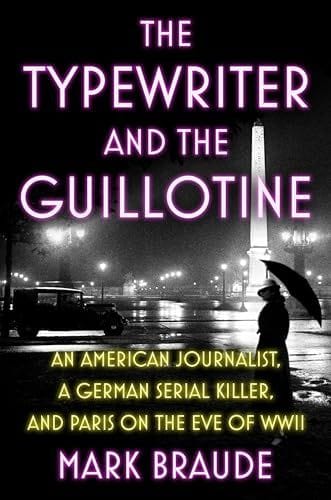
Mark Braude has found a subject tailor-made for the moment: a woman journalist who saw what was coming in Europe before almost anyone wanted to hear it, and who used her platform to sound the alarm anyway. Janet Flanner is not a household name, but she should be — and The Typewriter and the Guillotine makes a compelling case for her place in the history of American journalism and WWII literature alike. The dual structure Braude employs is smart and propulsive: the serial killer case gives the book its thriller momentum, while Flanner's evolving political journalism gives it its intellectual and moral weight. The two threads illuminate each other — Weidmann's crimes as a symptom of the same rot Flanner was documenting in her dispatches, both strands converging on the same darkening Europe. Readers who devoured Sonia Purnell's A Woman of No Importance or Damien Lewis's wartime narratives will find this essential company. For anyone drawn to stories of women who defied the limits placed on them to do work that mattered — and who turned out to be right when the world insisted otherwise — The Typewriter and the Guillotine is exactly the book you're looking for.