🚨 Spoilers ahead. That's the whole point. If you wanted to be surprised, you should have read the book.
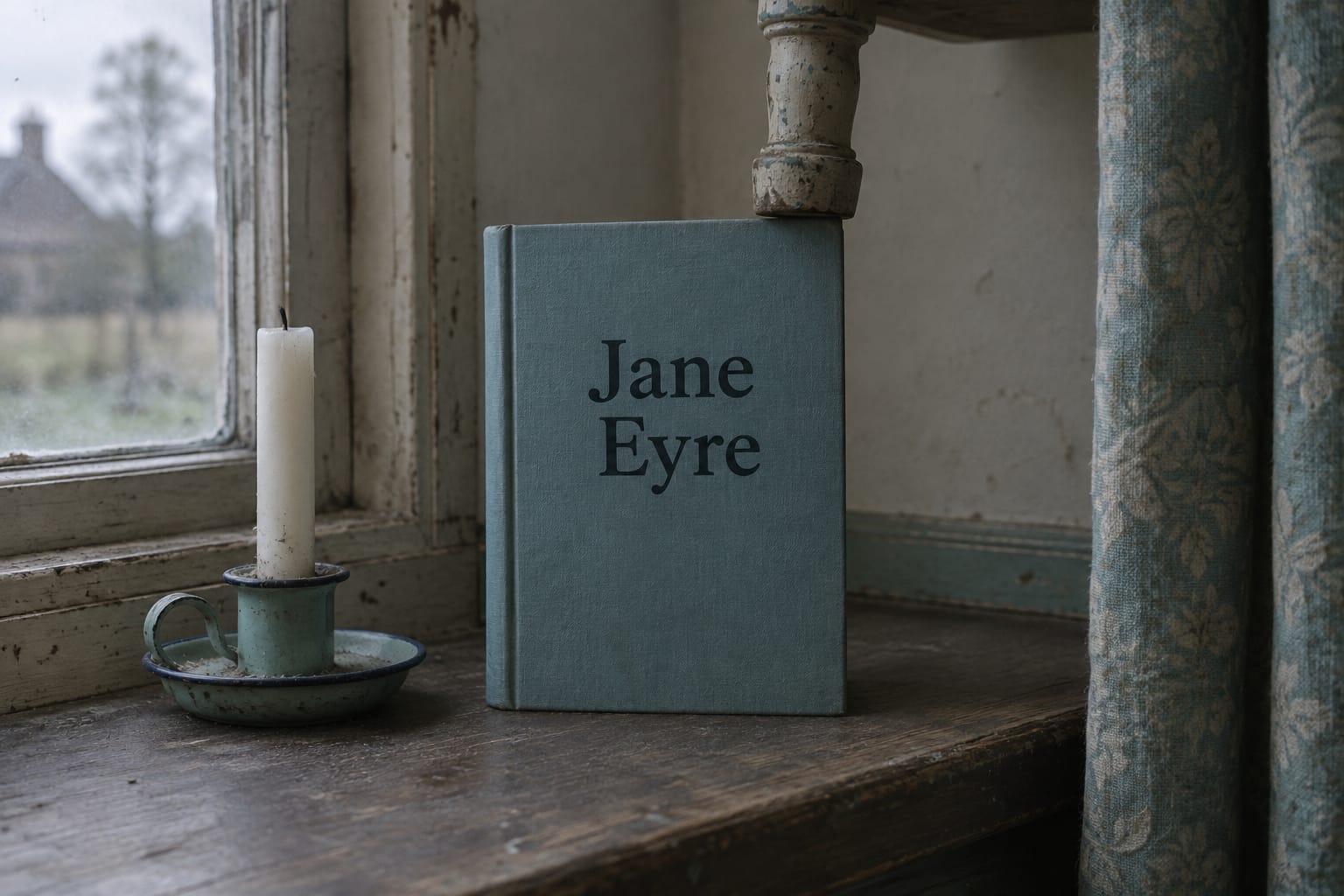
Orphaned Jane Eyre is raised by a cruel aunt, then sent to Lowood school. She becomes governess at Thornfield Hall, where she falls for Mr. Rochester. Their wedding stops when she learns his wife, Bertha Mason, is locked in the attic. Jane flees and is taken in by St. John Rivers and his sisters. She inherits a fortune from an uncle, refuses St. John's proposal, and hears Rochester's voice calling her. Thornfield has burned, Bertha is dead, and Rochester is blinded and missing a hand. Jane marries him. Reader, she does.
- Charlotte Brontë was Currer Bell. The 1847 first edition credits 'Currer Bell' as editor of 'Jane Eyre: An Autobiography.' Charlotte Brontë used that pen name, so early readers got a fake memoir with no named author.
- Lowood drew on a real school. Brontë based Lowood on Cowan Bridge, a school for clergymen's daughters. Her older sisters Maria and Elizabeth were pupils there, and both died in 1825, shortly after leaving.
- The second edition honored Thackeray. Brontë dedicated the second edition, published in 1848, to William Makepeace Thackeray, author of Vanity Fair. The dedication was a tribute from one novelist to another.
- “Jane Eyre ends with Rochester dying in the fire.” Wrong body count. Bertha dies when she sets Thornfield alight and leaps from the roof. Rochester survives, loses a hand and his sight, and Jane finds him at Ferndean and marries him.
- “Jane ends up marrying St. John Rivers.” Absolutely not, Reverend. He proposes and she refuses, offering to go to India only as his sister. She marries Rochester, and the book's last words go to St. John.
- “Jane only marries Rochester for his money.” Follow the money. Jane inherits 20,000 pounds from her uncle John Eyre before she goes back, so she is wealthy herself. She returns to a blind Rochester anyway.
- If they say: “Rochester is just a brooding romantic hero.”
You say: “I'd say he kept a wife locked in his attic. Mr. Mason and a solicitor stop the wedding, and Bertha has been living upstairs at Thornfield under Grace Poole's watch.” - If they say: “Bertha is just a mad villain.”
You say: “I'd say we mostly see her through Rochester's account. Jean Rhys thought she deserved her own story, so she wrote Wide Sargasso Sea in 1966 to give Bertha a past.”
🍸 Your Bar Line
Jane Eyre is a governess who walks out on a would-be bigamist, inherits a fortune, and still goes back, because the attic wife is dead and Rochester is blind.