🚨 Spoilers ahead. That's the whole point. If you wanted to be surprised, you should have read the book.
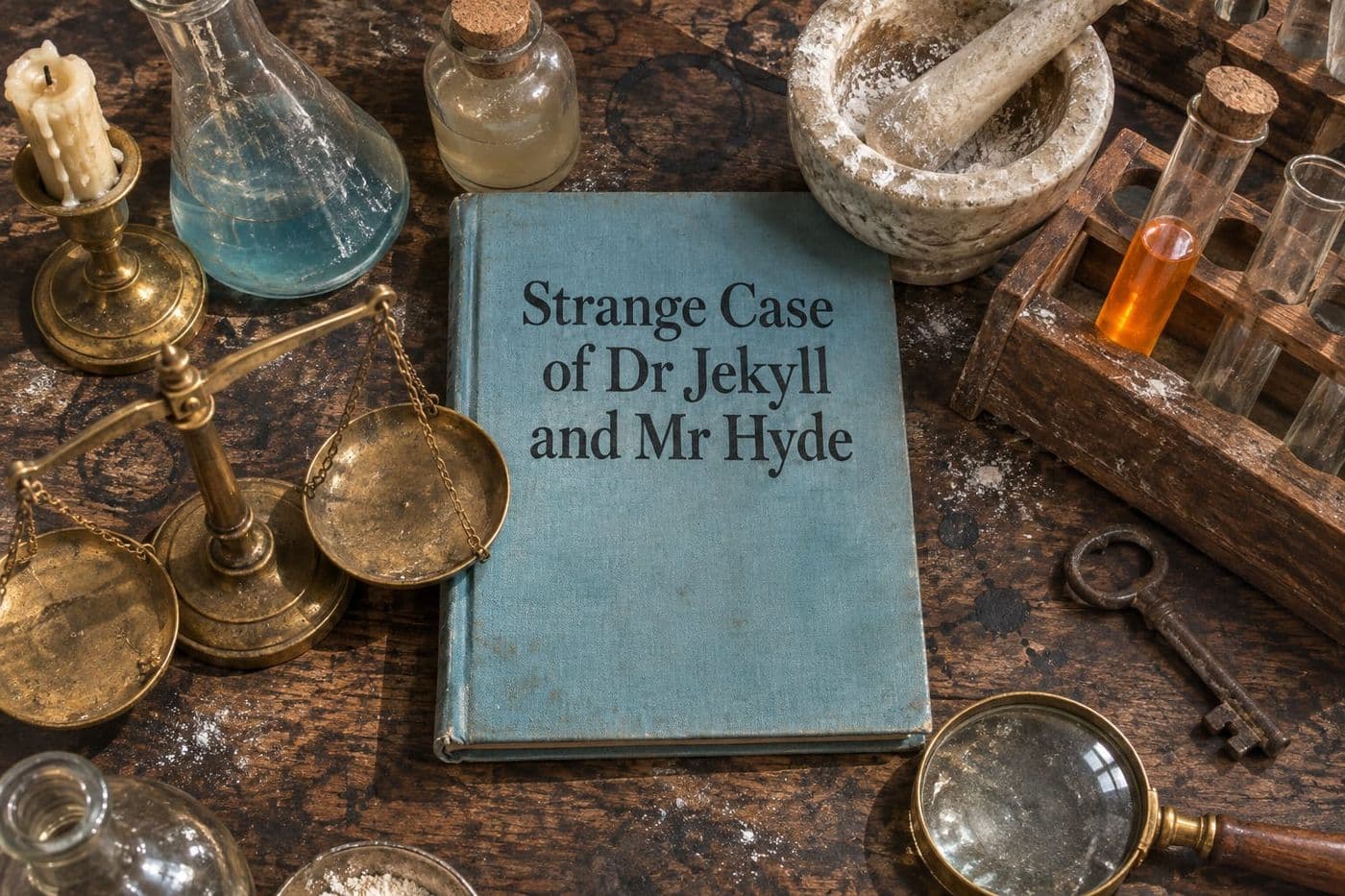
Lawyer Gabriel Utterson investigates when his friend Dr Henry Jekyll rewrites his will in favor of Edward Hyde, a brute who tramples a child and later beats Sir Danvers Carew to death. Dr Lanyon dies after watching Hyde drink a potion and turn into Jekyll. Jekyll's servant Poole summons Utterson. They break into the lab and find Hyde dead in Jekyll's clothes. Two documents explain everything: Jekyll made the potion, Hyde was him, and the working formula ran out. The title was never subtle.
- Stevenson set fire to his first draft. After his wife Fanny read it and said it missed the allegory, he burned the manuscript and rewrote the whole thing in a matter of days. Critics are rarely that persuasive.
- Dreams handed him the key scenes. In his essay 'A Chapter on Dreams,' Stevenson says his sleeping mind supplied the window scene and the transformation scene. He wrote the rest of the story around them.
- It launched as a one-shilling paperback. Longmans, Green published it in January 1886 for one shilling, priced like a cheap thriller rather than a prestige novel. Dr Jekyll started out as railway reading.
- “Mr Hyde is a hulking giant.” Wrong size. Hyde is smaller and younger than Jekyll, and when he walks home in Jekyll's clothes they hang off him. The creepy part is how little there is of him.
- “Jekyll drinks the potion every single time.” Potion not required. Hyde starts taking over without a dose, including in Regent's Park and in Jekyll's sleep. Meanwhile the original salt runs out, and no replacement batch works.
- “Utterson kills Hyde in the lab.” Utterson stays clean. He and Poole break down the lab door and find Hyde already dead, apparently by his own hand, in clothes far too big for him.
- If they say: “Isn't it just a split personality story?”
You say: “Not quite. Jekyll swallows a chemical, and at first he can choose when to change. The book treats it as an experiment gone wrong, not a mental illness.” - If they say: “So Jekyll narrates the whole thing?”
You say: “Mostly Utterson, the lawyer, tells it. Jekyll doesn't speak for himself until the last chapter, his Full Statement, and Lanyon's letter comes right before it.”
🍸 Your Bar Line
A lawyer hunts a small, nasty man called Hyde and learns he is Jekyll on a chemical bender, undone by an impure salt. The twist is the title.