🚨 Spoilers ahead. That's the whole point. If you wanted to be surprised, you should have read the book.
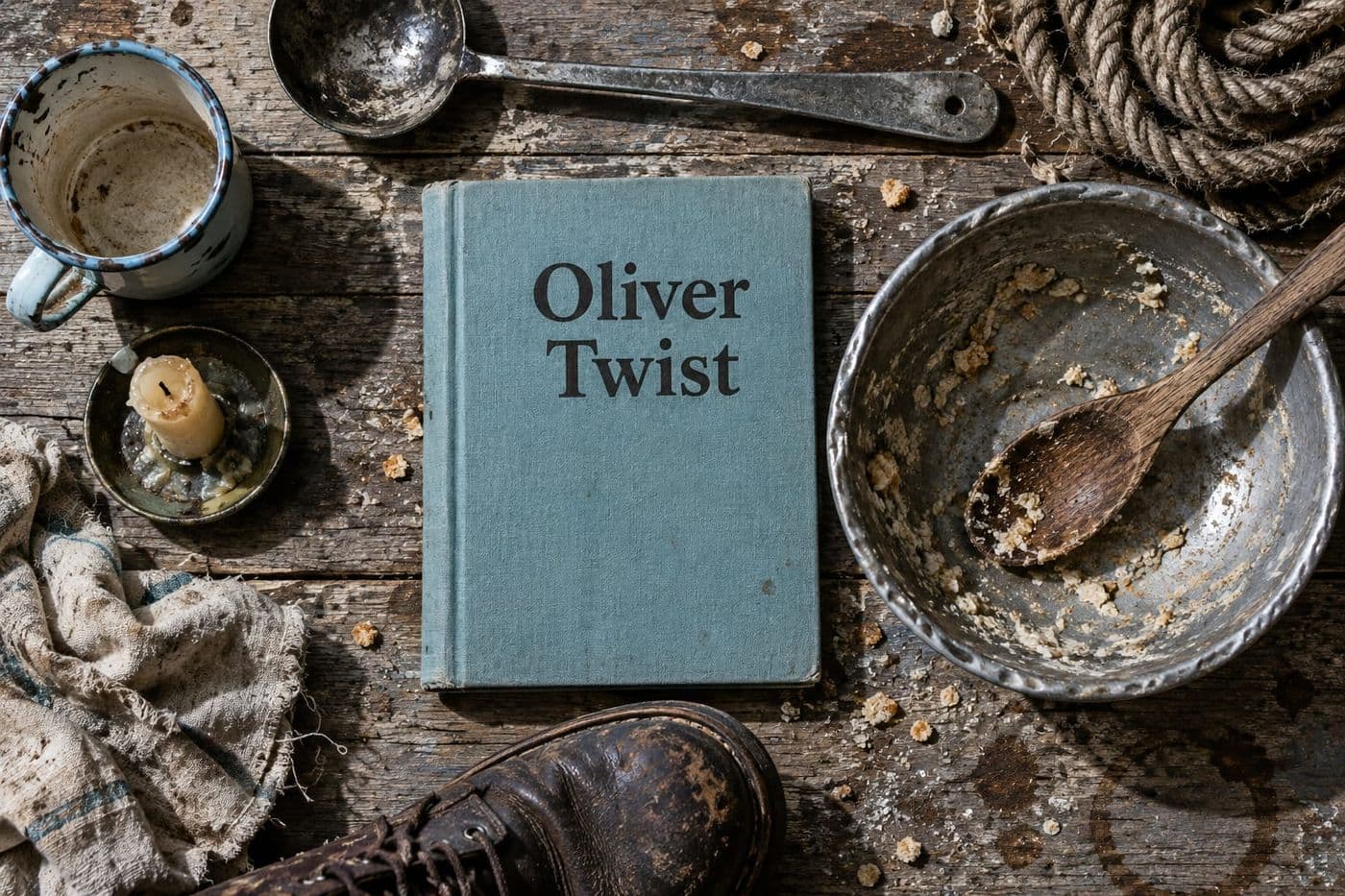
Oliver Twist is born in a workhouse, and his mother dies. Mr. Bumble and the parish raise him badly. After he asks for more gruel, he is apprenticed to an undertaker, then runs to London. Fagin's gang of child thieves takes him in. Mr. Brownlow rescues him, but Bill Sikes drags him back. Nancy tries to save him and Sikes murders her. Sikes dies by accident while fleeing, and Fagin is hanged. Oliver turns out to be Rose Maylie's nephew. Brownlow corners Oliver's half-brother Monks, and adopts Oliver.
- Dickens wrote two novels at once. Oliver Twist ran monthly in Bentley's Miscellany from February 1837, while The Pickwick Papers was still coming out. Dickens was also editing the magazine. Pickwick finished in November 1837. Oliver ran until April 1839.
- Twist is not a plot twist. Mr. Bumble names workhouse orphans alphabetically. The last one was Swubble, so Oliver gets Twist. The next orphan in line, he says, will be Unwin.
- The full title has a second half. It is Oliver Twist; or, The Parish Boy's Progress. The subtitle nods to Bunyan's The Pilgrim's Progress and points the story at the parish workhouse system.
- “Oliver Twist picks pockets for Fagin.” Slow down. Oliver watches the Dodger and Charley Bates lift Mr. Brownlow's handkerchief, runs, and gets blamed for it. He never steals a thing, and Brownlow ends up taking him in.
- “Fagin beats Nancy to death.” Wrong villain. Fagin tells Sikes that Nancy has informed on them, but Bill Sikes does the killing himself. Fagin is later tried, condemned, and hanged.
- “Oliver says, 'Please, sir, can I have more?'” Not quite. The line is 'Please, sir, I want some more.' Oliver says it after the boys draw lots, and it comes out blunt, not polite.
- If they say: “Who is Monks to Oliver?”
You say: “Monks is Edward Leeford, Oliver's half-brother. He plots with Fagin to turn Oliver into a criminal so he can keep their father's money. Brownlow corners him near the end.” - If they say: “It's just a sad orphan story.”
You say: “I'd say it's a takedown of the workhouse system. Dickens aims at the Poor Law through Mr. Bumble, and Oliver's rescue hinges on a pile of coincidences.”
🍸 Your Bar Line
Oliver Twist is a workhouse orphan who asks for more, never steals a thing, and outlasts Sikes, while Mr. Bumble names him alphabetically and half-brother Monks schemes for the money.