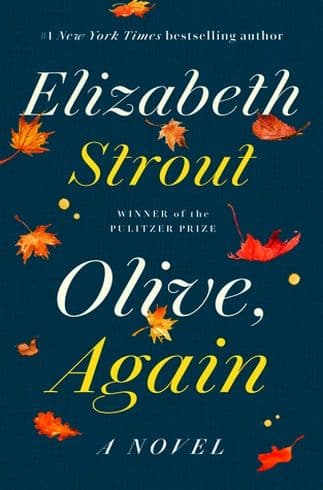
Olive, Again
by Elizabeth Strout
Literary Fiction
Contemporary
304 Pages
"I missed Olive more than I realized. In Olive, Again she is as blunt and flawed as ever, and Strout's plain, honest writing made me tear up when I least expected it."
Synopsis
In Olive, Again, Elizabeth Strout returns to Crosby, Maine, the small coastal town where retired schoolteacher Olive Kitteridge has lived most of her life. Olive is as forthright and difficult as ever, a woman who says exactly what she thinks and often regrets how it lands. But the years have changed her, and she is now facing a stage of life that asks different things of her.
The book moves through a series of connected stories. Olive finds herself drawn into new relationships, including a second chance at companionship. She also confronts the loneliness and loss that come with growing older, and her fraught ties to her son and to the neighbors who have known her for decades. Around her, the people of Crosby wrestle with their own troubles, from strained marriages to quiet disappointments, and Olive's presence touches each of them in ways both small and lasting.
At its heart, the novel asks what it means to be known by others, and by ourselves, late in life. Can someone so set in her ways still change, and can she still reach out when it matters most? Strout explores those questions with humor, compassion, and a clear eye for the hidden currents of ordinary lives.
Our Take
Olive Kitteridge is one of those characters who sticks to you, and the great pleasure of Olive, Again is spending more time with her. She is still prickly, still direct, and still capable of surprising kindness, but now she is older and the stakes feel quieter and more personal. Strout follows her through new relationships, loss, and the long work of making peace with who she has been.
Like its predecessor, the book is built from linked stories set in the small town of Crosby, Maine. Olive sometimes sits at the center of a chapter and sometimes drifts through the edges of someone else's life. That structure lets Strout paint a whole community, and it makes ordinary moments carry real weight. Her prose is plain and precise, and she trusts readers to feel what her characters can't say out loud.
If you loved Olive Kitteridge, this is a natural next step, though it stands well enough on its own. It also pairs nicely with Strout's My Name Is Lucy Barton, and with Richard Russo's Empire Falls, another warm, wry portrait of a struggling small town. Fans of Fredrik Backman's A Man Called Ove will find a similar mix of grumpiness and tenderness here.
This one is for readers who like character over plot, who appreciate honest writing about aging, and who don't mind a few tears alongside the laughs.