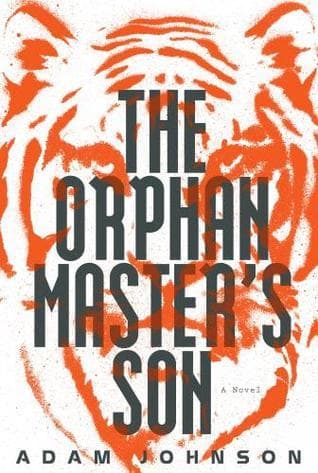
The Orphan Master's Son
by Adam Johnson
Literary Fiction
Political Fiction
443 pages
"I could not stop thinking about Pak Jun Do after I finished. The Orphan Master's Son is bleak, strange, and surprisingly moving, and Johnson's writing pulled me into a world I'll never forget."
Synopsis
The Orphan Master's Son takes place in North Korea, a country where every citizen's life is shaped by the state and its relentless stories. At the center is Pak Jun Do, who grows up in an orphanage run by his father, a man who claims to be its master. Though the boys there are not truly orphans in the usual sense, they learn early that survival depends on obedience and on staying useful.
As Jun Do grows older, his path carries him into some of the country's most shadowy work. His skills draw the attention of powerful people, and he is sent on missions that take him far beyond the world he knew. Along the way he crosses paths with figures at the heart of the regime, including the famous actress Sun Moon, whose life is closely watched and tightly controlled.
The central conflict is a quiet but dangerous one. In a place where identity can be rewritten and truth is whatever the authorities say it is, Jun Do must decide who he is, what he is willing to do, and whom he is willing to protect. The stakes grow personal and enormous at once, and every choice could cost him dearly. Adam Johnson blends dark humor, suspense, and deep humanity in a story that earned the Pulitzer Prize for Fiction.
Our Take
The great pleasure of The Orphan Master's Son is how it pairs a bleak setting with real narrative energy. Adam Johnson builds a world of propaganda, surveillance, and fear, then sends a single man through it in a story that moves like an adventure while never losing its moral weight. It won the Pulitzer Prize for Fiction, and the reputation is earned.
The book sits in a lineage of fiction that uses a closed society to ask what a person is worth when the state controls the story. Readers who loved Viet Thanh Nguyen's The Sympathizer will recognize the mix of dark humor, identity questions, and political nerve. Those drawn to the atmosphere of oppression in George Orwell's 1984 will find a very different voice here, more human and more strange, though just as unsettling.
Johnson's prose is vivid and precise, and he plays with voice and perspective in ways that keep you slightly off balance. The central themes are identity, loyalty, love, and the stories we are told to believe about ourselves. It is not a light read, and some scenes are harsh, but there is tenderness in it too.
If you want to pair it with nonfiction, Barbara Demick's Nothing to Envy offers a reported look at ordinary lives in North Korea. This novel suits readers who like ambitious, immersive literary fiction with real stakes, and who do not mind a book that asks for patience and rewards it.