Before it was a summer blockbuster that emptied beaches nationwide, Jaws was a bestselling novel with a much messier cast of humans onshore. Here's how the story changed on its way to the screen.
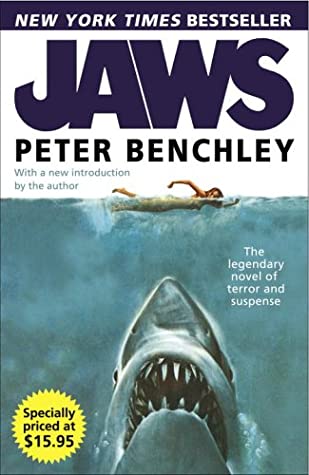
The Book
Jaws
by Peter Benchley
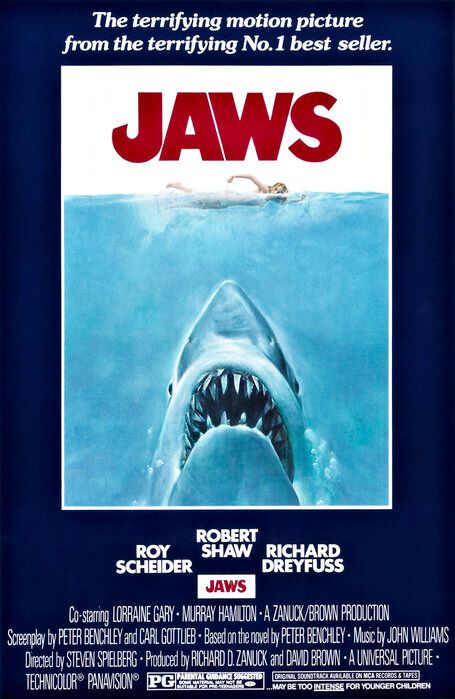
The Film
Jaws
Directed by Steven Spielberg, 1975
🔀 What Changed
Spoiler warning: this section discusses plot changes, including the ending.
Benchley's novel leans heavily into a subplot involving Ellen Brody's affair with Matt Hooper and a mafia-adjacent storyline for the town's mayor, both cut entirely from the film to keep focus on the shark hunt. Quint's death also differs significantly: in the book he's dragged under and drowns, while the film gives him a far more visceral end, bitten in half aboard the sinking Orca. Hooper survives in the movie, escaping a shark cage attack that kills him in the novel. The film also strips out much of the book's interior monologuing about small-town corruption, tightening the story into a leaner man-versus-nature thriller.
🎙️ What the Author Said
Benchley was involved in early drafts of the screenplay but has spoken candidly about disliking his own novel's characters, saying in interviews he found several of them unlikeable and was glad the film trimmed the affair subplot and other digressions. He's on record calling Spielberg's adaptation an improvement in pacing and character, though he also expressed later-life regret over the shark-panic culture the book and film both fueled, unrelated to the adaptation's fidelity itself.
“Benchley admitted he didn't even like his own characters.”
Two very different tellings of the same shark hunt, one sprawling and one streamlined. Now it's your call.