Our Take
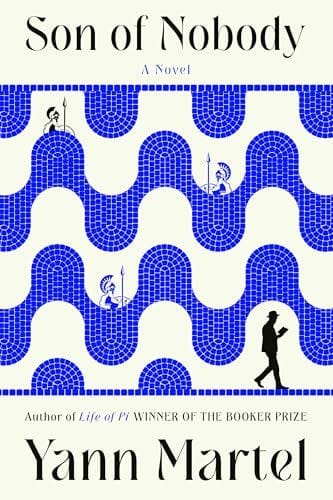
Yann Martel has always been drawn to structural audacity -- Life of Pi embedded its story inside a frame that asked the reader to choose between versions of the truth, and Son of Nobody does something similarly vertiginous. The novel presents itself as a scholarly edition: Harlow's translation of the Psoad in verse, annotated by his own footnotes, which gradually reveal a second narrative running alongside the ancient one. It is a book about a book about a war, and also about a man falling apart in Oxford while pretending to be doing research. The formal invention is remarkable, but Martel earns it emotionally. Psoas and Harlow are separated by thirty centuries and united by the same essential failure: both chose the call of glory or ambition over the people at home who needed them. The parallel is not subtle, but Martel handles it with enough wit and genuine feeling that it never becomes schematic. The Psoad sections, rendered in free verse, move with surprising momentum for an invented ancient epic, and the footnotes -- where Harlow's personal life slowly surfaces -- are the best kind of literary device: one that does narrative work rather than merely showing off. Readers who loved Madeline Miller's The Song of Achilles for its reframing of the Trojan War through an overlooked perspective, or who were captivated by Zachary Mason's The Lost Books of the Odyssey, will find this essential. A genuinely original novel from one of the most formally inventive writers working today.