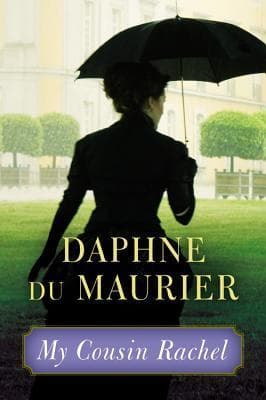
My Cousin Rachel
by Daphne du Maurier
Psychological Suspense
Gothic
352 Pages
"I could not decide about Rachel, and I loved that. Philip's certainty kept shifting under me, and du Maurier's Cornwall felt so vivid. My Cousin Rachel had me doubting everyone, including the narrator."
Synopsis
My Cousin Rachel opens in nineteenth century Cornwall, where Philip Ashley has been raised by his older cousin Ambrose on a beloved coastal estate. Orphaned young, Philip knows only the household Ambrose built, a quiet world without women.
Then Ambrose travels to Italy for his health and, to Philip's shock, marries a distant cousin named Rachel. His letters home grow troubled and strange. Before Philip can reach him, Ambrose is dead, and Philip is left with grief and a growing suspicion that Rachel is to blame.
When she arrives at the estate in England, Philip expects to meet a villain. Instead he finds a woman who is warm, elegant, and very hard to read. As his anger gives way to fascination, he must decide whether his instincts can be trusted or whether he is being carefully led.
Du Maurier builds the stakes around one question that hangs over every page: who is Rachel, really? The answer matters for Philip's heart, his home, and his future.
Our Take
The great trick of My Cousin Rachel is that it never lets you settle. Daphne du Maurier gives us a narrator who is sure he knows the truth, then slowly shows how much his certainty depends on grief, pride, and inexperience. Rachel herself stays just out of focus, and that ambiguity is the engine of the whole novel.
If you know du Maurier through Rebecca, this will feel familiar in its Cornish atmosphere and its sense of a household haunted by a person who is absent or impossible to read. The difference is the perspective. Here the story is told by a young man, and his unreliability gives the suspense a different, more uneasy edge.
The prose is elegant and unhurried, and it rewards patience. Themes of trust, inheritance, desire, and the stories we tell ourselves about people we cannot fully know run through every chapter. It is a slow burn, but the tension tightens steadily, and it is the kind of book that readers argue about long after the last page.
It is a good fit for fans of classic gothic fiction and psychological suspense. If you enjoy Jane Eyre by Charlotte Brontë or The Little Stranger by Sarah Waters, this one belongs on your shelf.