🚨 Spoilers ahead. That's the whole point. If you wanted to be surprised, you should have read the book.
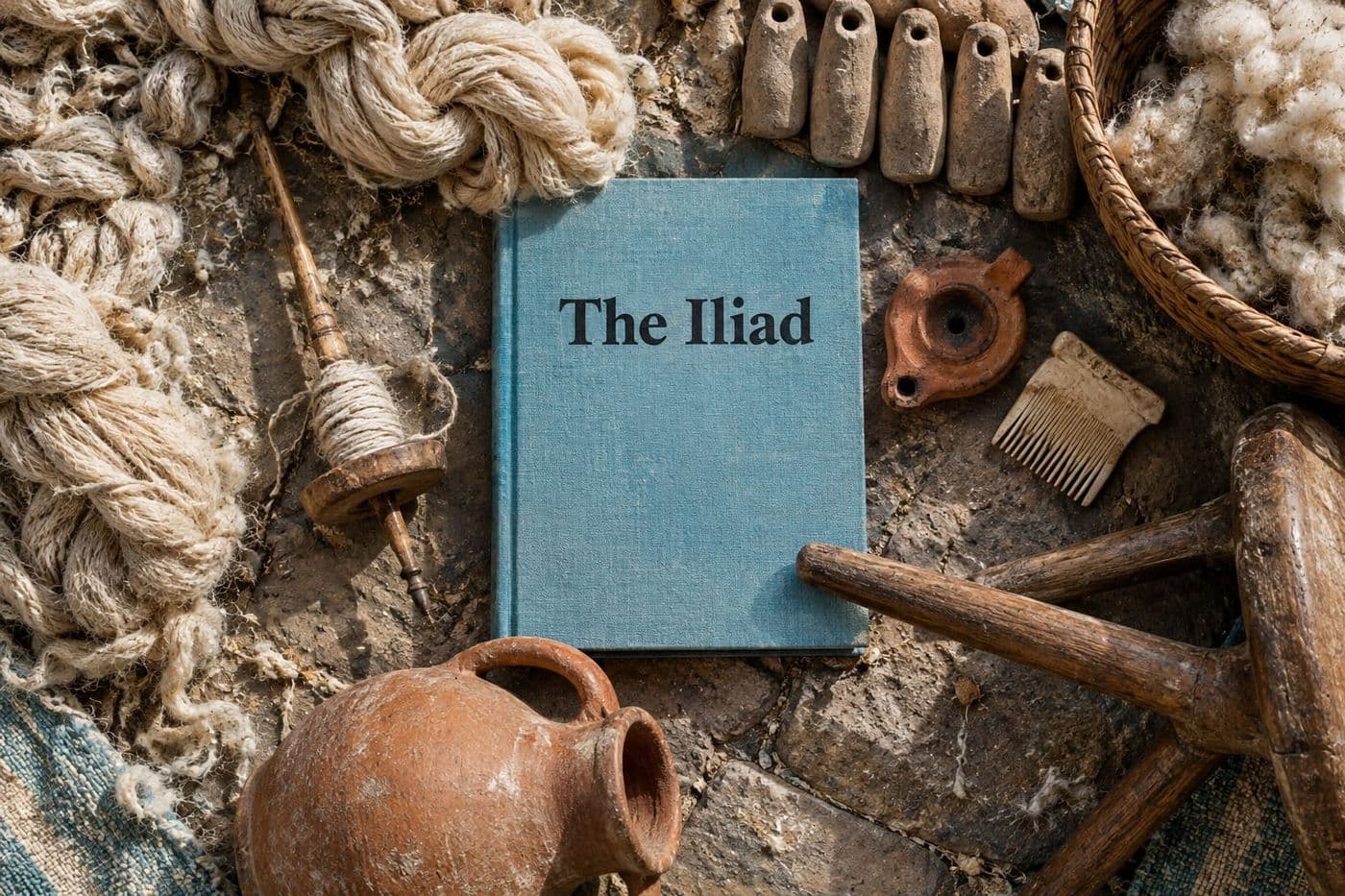
In the tenth year of the Trojan War, Agamemnon takes Briseis from Achilles, and Achilles quits fighting. The Greeks start losing. Patroclus, Achilles' closest friend, borrows his armor and leads the Myrmidons into battle. Hector kills him. Furious, Achilles returns, kills Hector outside Troy's walls, and drags the body behind his chariot. Priam, Hector's father, sneaks into the Greek camp and begs for his son. Achilles relents. Troy mourns, Hector is buried, and the poem stops. Just a very long grudge and a funeral.
- A horse talks back to Achilles. Xanthus, one of Achilles' immortal horses, speaks in Book 19 after Hera gives him a voice. He warns Achilles that his death is coming, and then the Furies shut him up.
- Mortals wound gods in this poem. In Book 5, the Greek Diomedes wounds Aphrodite in the hand and later stabs Ares in the belly, with Athena guiding his spear. Ares limps off to complain to Zeus.
- The epic's plot starts with a quarrel. Agamemnon must give back his captive Chryseis, so he seizes Briseis from Achilles. That insult sparks the rage the poem announces in its opening line. The best Greek fighter walks off over a war prize.
- “The Iliad is the one with the Trojan Horse.” Wrong horse. The wooden horse never appears here. The poem ends with Hector's funeral, before Troy falls. The horse turns up in the Odyssey, where the bard Demodocus sings about it.
- “Achilles dies from an arrow in the heel.” Heel nothing. Achilles is alive when the poem ends, and his death is only foretold. The heel weakness comes from later tradition, such as Statius's Achilleid, not from Homer.
- “Helen's face launched a thousand ships, says Homer.” Marlowe says hi. That line belongs to Christopher Marlowe's play Doctor Faustus, written in the late 1500s. Homer never says it, and the Iliad has no such sentence about Helen.
- If they say: “Whose armor is Hector wearing when Achilles kills him?”
You say: “I say it's Achilles' own armor. Hector stripped it from Patroclus after killing him, so Achilles spears him through the one gap at the throat.” - If they say: “Achilles wins, so he is the good guy.”
You say: “I'd say the poem is less sure. Achilles drags Hector's body behind his chariot, and the gods object. Then he weeps with Priam in Book 24 and hands the body back.”
🍸 Your Bar Line
The Iliad is Achilles' grudge, a borrowed suit of armor, and one dead Trojan, and it ends on Hector's funeral with no horse and no heel in sight.