James Ellroy's dense, multi-stranded 1990 crime novel L.A. Confidential got trimmed into one of the sharpest neo-noirs of the 1990s. Here's how the book and the film actually diverge, and what Ellroy himself thought of the result.
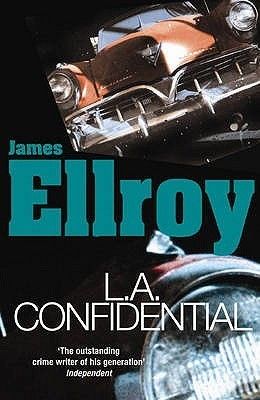
The Book
L.A. Confidential
by James Ellroy
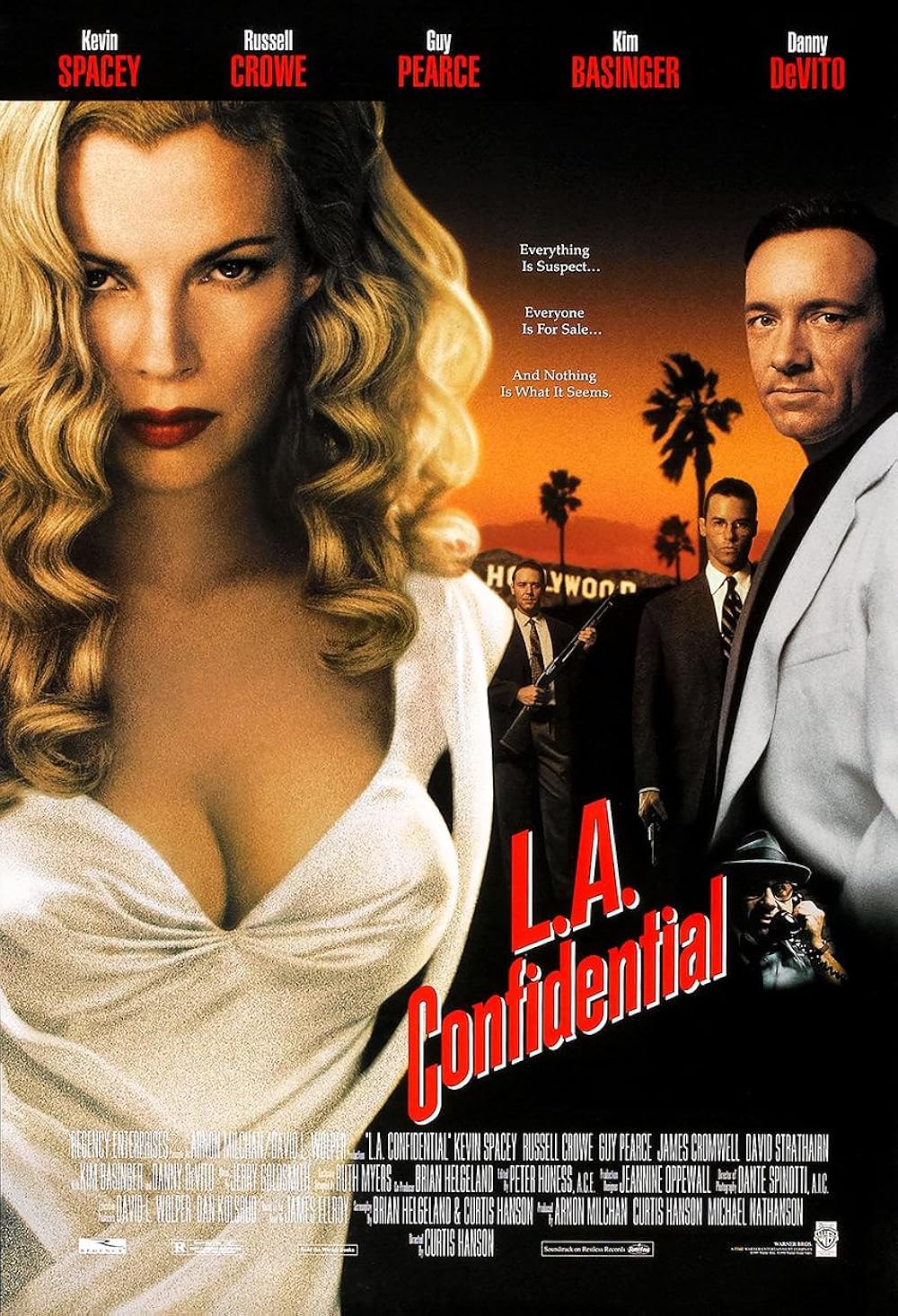
The Film
L.A. Confidential
Directed by Curtis Hanson, 1997
🔀 What Changed
Spoiler warning: this section discusses plot changes, including the ending.
Ellroy's novel is a sprawling, decade-spanning web of corruption with a much larger cast and a far bleaker, more violent texture than the film allows. Screenwriters Brian Helgeland and Curtis Hanson cut entire subplots and secondary characters to focus the story on three central detectives, compressing years of plot into a tighter timeframe. The novel's ending is darker and messier than the film's more conventionally satisfying conclusion, and several characters' fates were softened or altered for the screen. The film also streamlines the Pierce Patchett and pornography-ring storylines, which run much longer and more tangled in the book.
🎙️ What the Author Said
Ellroy has repeatedly praised the adaptation in interviews, calling it one of the few film versions of his work he genuinely admires, and has credited Hanson and Helgeland for capturing the spirit of the novel despite the necessary cuts. He has been notably more positive about this adaptation than about other films made from his books, often citing it as the gold standard for how his dense plotting can be translated to screen.
“Ellroy has called it the best film made from any of his books.”
Both versions have their defenders, and the differences are real enough to matter. Now it's your turn to weigh in.