Classics

Recent Content

Say You'll Remember Me

Say You'll Remember Me

Say You'll Remember Me by Abby Jimenez: A veterinarian meets his match in a woman who can't commit—but their connection refuses to fade.

Read more
Hemlock & Silver

Hemlock & Silver

Hemlock & Silver by T. Kingfisher: A dark Snow White retelling where a poison-drinking healer must save a dying princess from magical threats.

Read more
Blacktop Wasteland

Blacktop Wasteland

Blacktop Wasteland by S.A. Cosby: A reformed getaway driver is pulled back into crime for one last heist that goes catastrophically wrong.

Read more
Checkout 19

Checkout 19

Checkout 19 by Claire-Louise Bennett: A radical novel about a young woman discovering her creative genius through books, people, and imagination.

Read more
Say Nothing

Say Nothing

Say Nothing by Patrick Radden Keefe: The mesmerizing true story of a mother's murder and Northern Ireland's Troubles and their aftermath.

Read more
See All Content
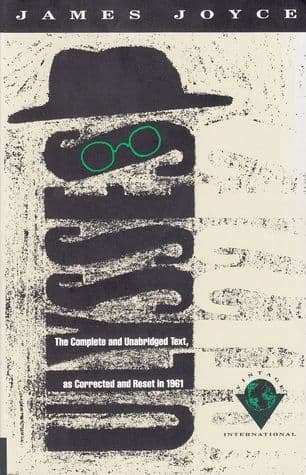
Ulysses book cover

Ulysses

by James Joyce

Modernist
Stream of Consciousness
Experimental
783 Pages

"Reading Ulysses isn't just about understanding the text—it's about experiencing language in an entirely new way. Joyce taught me that a novel can be as complex, contradictory, and simultaneously coherent as human consciousness itself."

Synopsis

Ulysses chronicles a single day—June 16, 1904—in Dublin, Ireland, paralleling Homer's Odyssey in its structure and themes. The narrative follows three main characters: Leopold Bloom, an advertising canvasser and secular Jew; Stephen Dedalus, a young teacher and aspiring writer; and Molly Bloom, Leopold's wife who is planning an adulterous encounter. Beginning at 8 a.m., the novel tracks Leopold's journey through Dublin as he attends a funeral, visits a newspaper office, eats lunch, goes to the library, walks along the beach, enters a maternity hospital, and ultimately finds himself in a nighttown brothel. Meanwhile, Stephen, still mourning his mother's death, teaches a history class, walks along the beach philosophizing, and ends up in the same brothel after a drinking binge. Eventually, Leopold rescues the intoxicated Stephen from a confrontation and brings him home, where they share a late-night cocoa. The novel culminates in Molly's famous soliloquy—an unpunctuated stream-of-consciousness exploring her thoughts on her marriage, her infidelity, and her past. Through these ordinary events, Joyce creates an encyclopedic portrait of Dublin life while exploring themes of identity, paternity, religion, nationalism, and the artist's place in society.

Our Take

Ulysses stands as the definitive modernist novel and perhaps literature's most ambitious attempt to capture the totality of human experience within its pages. Joyce's revolutionary achievement lies in his radical expansion of what a novel could do—each of the book's eighteen episodes employs different literary techniques and styles, from straightforward narrative to catechism to dream-like hallucination to unpunctuated stream-of-consciousness. This formal experimentation isn't mere showing off but perfectly embodies the novel's exploration of how consciousness itself operates through multiple modes of perception and expression. Beneath its intimidating reputation, Ulysses offers genuine pleasures: its encyclopedic humor ranging from sophisticated wordplay to bathroom jokes; its compassionate portrayal of Leopold Bloom as an unlikely everyman hero navigating a world of casual antisemitism; its extraordinarily sensual attention to the sights, sounds, smells, and textures of urban life; and its celebration of ordinary existence as worthy of the same artistic treatment as classical epics. What makes the novel enduringly relevant is how it balances intellectual complexity with emotional resonance, particularly in its underlying theme of connection: Stephen's search for a father figure, Leopold's yearning for a son to replace his dead child, and Molly's final affirmation of life and love despite acknowledgment of its imperfections. Though famously difficult, Ulysses rewards persistence by offering a uniquely immersive literary experience that continues to influence how we understand both the novel form and human consciousness itself.
Related Content

Terms and ConditionsDo Not Sell or Share My Personal InformationPrivacy PolicyPrivacy NoticeAccessibility NoticeUnsubscribe
Copyright © 2026 Plot Digest