Classics

Recent Content

Say You'll Remember Me

Say You'll Remember Me

Say You'll Remember Me by Abby Jimenez: A veterinarian meets his match in a woman who can't commit—but their connection refuses to fade.

Read more
Hemlock & Silver

Hemlock & Silver

Hemlock & Silver by T. Kingfisher: A dark Snow White retelling where a poison-drinking healer must save a dying princess from magical threats.

Read more
Blacktop Wasteland

Blacktop Wasteland

Blacktop Wasteland by S.A. Cosby: A reformed getaway driver is pulled back into crime for one last heist that goes catastrophically wrong.

Read more
Checkout 19

Checkout 19

Checkout 19 by Claire-Louise Bennett: A radical novel about a young woman discovering her creative genius through books, people, and imagination.

Read more
Say Nothing

Say Nothing

Say Nothing by Patrick Radden Keefe: The mesmerizing true story of a mother's murder and Northern Ireland's Troubles and their aftermath.

Read more
See All Content
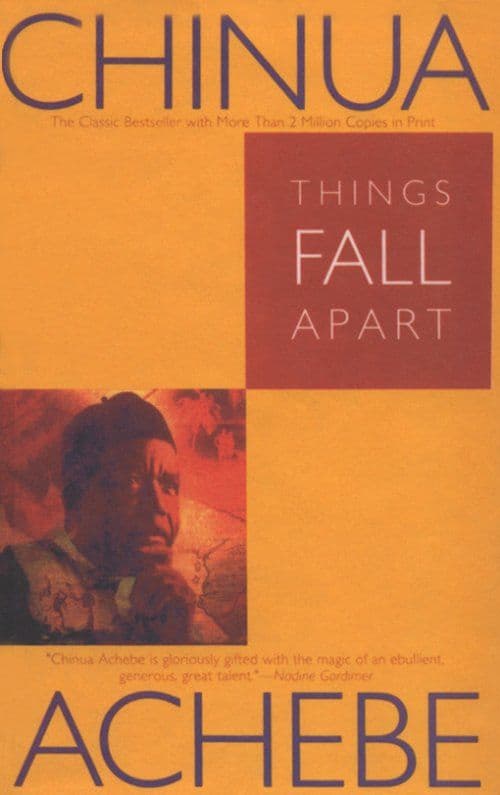
Things Fall Apart book cover

Things Fall Apart

by Chinua Achebe

Literary Fiction
Postcolonial
Classic
215 Pages

"Achebe's storytelling is both beautiful and heartbreaking—this essential novel opened my eyes to the richness of Igbo culture and the tragedy of colonialism."

Synopsis

Set in late 19th-century Nigeria, Things Fall Apart follows Okonkwo, a respected warrior and leader in the Igbo village of Umuofia. Driven by fear of weakness and failure, Okonkwo has built his reputation through strength, hard work, and adherence to traditional values that have governed his people for generations. The novel opens by establishing the rich complexity of Igbo society, with its intricate social structures, religious beliefs, seasonal festivals, and systems of justice that have maintained order and meaning for centuries. When British missionaries and colonial administrators arrive in the region, they bring with them a new religion and foreign systems of government that directly conflict with everything Okonkwo and his community hold sacred. Things Fall Apart chronicles the gradual but devastating transformation of Igbo society as traditional ways of life come under assault from colonial forces that view local customs as primitive and barbaric. The novel explores how some community members adapt to or embrace the changes while others, like Okonkwo, resist with increasing desperation and violence. Through Okonkwo's personal tragedy, Achebe illustrates the broader cultural catastrophe experienced by African societies under colonialism, showing how the imposition of foreign values and systems can destroy not just political structures but the very foundations of identity and meaning that hold communities together.

Our Take

Things Fall Apart stands as one of the most important novels of the 20th century, fundamentally changing how African literature is written and read while providing essential counter-narrative to colonial perspectives on African history and culture. Chinua Achebe's groundbreaking achievement lies in his presentation of pre-colonial Igbo society as complex, sophisticated, and morally nuanced rather than the primitive stereotype perpetuated by colonial literature. His prose combines the oral storytelling traditions of his culture with Western literary techniques, creating a unique voice that bridges two worlds while honoring both. The novel's influence on postcolonial literature cannot be overstated, inspiring generations of writers including Ngugi wa Thiong'o, Chimamanda Ngozi Adichie, and Teju Cole to tell their own stories from African perspectives. Achebe's portrayal of Okonkwo as a tragic hero whose greatest strengths become his downfall demonstrates classical literary structure while exploring specifically African themes of honor, masculinity, and cultural change. The book's exploration of how colonialism destroys not just political systems but entire ways of understanding the world remains painfully relevant to contemporary discussions of cultural imperialism and identity. Essential reading for anyone seeking to understand African literature, postcolonial studies, or the lasting impact of colonialism on indigenous cultures. This novel has rightfully earned its place in the canon of world literature as both artistic achievement and historical document.
Related Content

Terms and ConditionsDo Not Sell or Share My Personal InformationPrivacy PolicyPrivacy NoticeAccessibility NoticeUnsubscribe
Copyright © 2026 Plot Digest