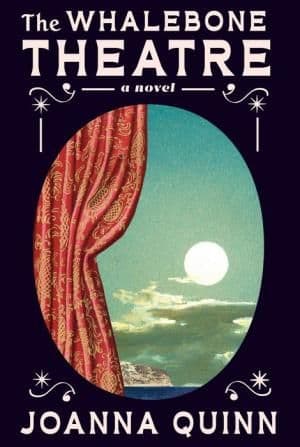
The Whalebone Theatre
by Joanna Quinn
Historical Fiction
Literary Fiction
Coming-of-Age
558 Pages
"A magnificent debut—The Whalebone Theatre is sweeping, inventive, and utterly transporting, following an unforgettable heroine who refuses to be confined by the roles written for her."
Synopsis
Cristabel Seagrave has always wanted her life to be a story, but there are no girls in the books in her dusty family library. For an unwanted orphan who grows into an unmarriageable young woman, there is no place at all for her in a traditional English manor. But from the day a whale washes up on the beach at the Chilcombe estate in Dorset, and twelve-year-old Cristabel plants her flag and claims it as her own, she is determined to do things differently. With her step-parents blithely distracted by endless party guests, Cristabel and her siblings, Flossie and Digby, scratch together an education from the plays they read in their freezing attic, drunken conversations eavesdropped through oak-panelled doors, and the esoteric lessons of Maudie their maid. But as the children grow to adulthood and war approaches, jolting their lives onto very different tracks, it becomes clear that the roles they are expected to play are no longer those they want. As they find themselves drawn into the conflict, they must each find a way to write their own story. This is the tale of an old English manor house by the sea, with crumbling chimneys, draping ivy, and a library full of dusty hardbacks. It's the story of three children who create their own adventures while grown-ups entertain party guests—the worlds they imagine from forbidden books and the lessons learned through eavesdropping. Most of all, it's about a girl who transforms a whale's bones into a theatre and refuses to accept the narrow path laid out for her.
Our Take
Joanna Quinn's spectacular debut is a sprawling, exuberant novel that manages to be both a love letter to English country house fiction and a subversion of its conventions. The Whalebone Theatre begins with the magical realism of a beached whale transformed into a children's theatre and expands into an epic spanning the interwar years through World War II, following Cristabel's fierce determination to claim agency in a world that offers women few options. Quinn writes with wit, warmth, and a distinctive voice that brings to mind the best of British historical fiction—the social observation of Evelyn Waugh, the emotional depth of Pat Barker, the playfulness of A.S. Byatt. The novel's first half, depicting the children's improvisational education and theatrical productions, sparkles with invention and humor, while the second half, set during wartime, takes on greater weight and urgency as Cristabel joins the SOE and finds purpose beyond the confines of Chilcombe. What makes the book remarkable is Quinn's ability to balance whimsy with genuine darkness, creating a protagonist whose refusal to accept prescribed roles feels both period-appropriate and utterly contemporary. The prose is rich and textured, occasionally indulgent but never dull, packed with striking images and sharp observations about class, gender, and the stories we tell ourselves. Readers who loved Kate Atkinson's Life After Life or Sarah Waters's historical novels will be entranced by Quinn's ambitious debut. For anyone seeking immersive historical fiction with an unforgettable heroine and a distinctive voice, The Whalebone Theatre is a triumph that announces a major new talent.