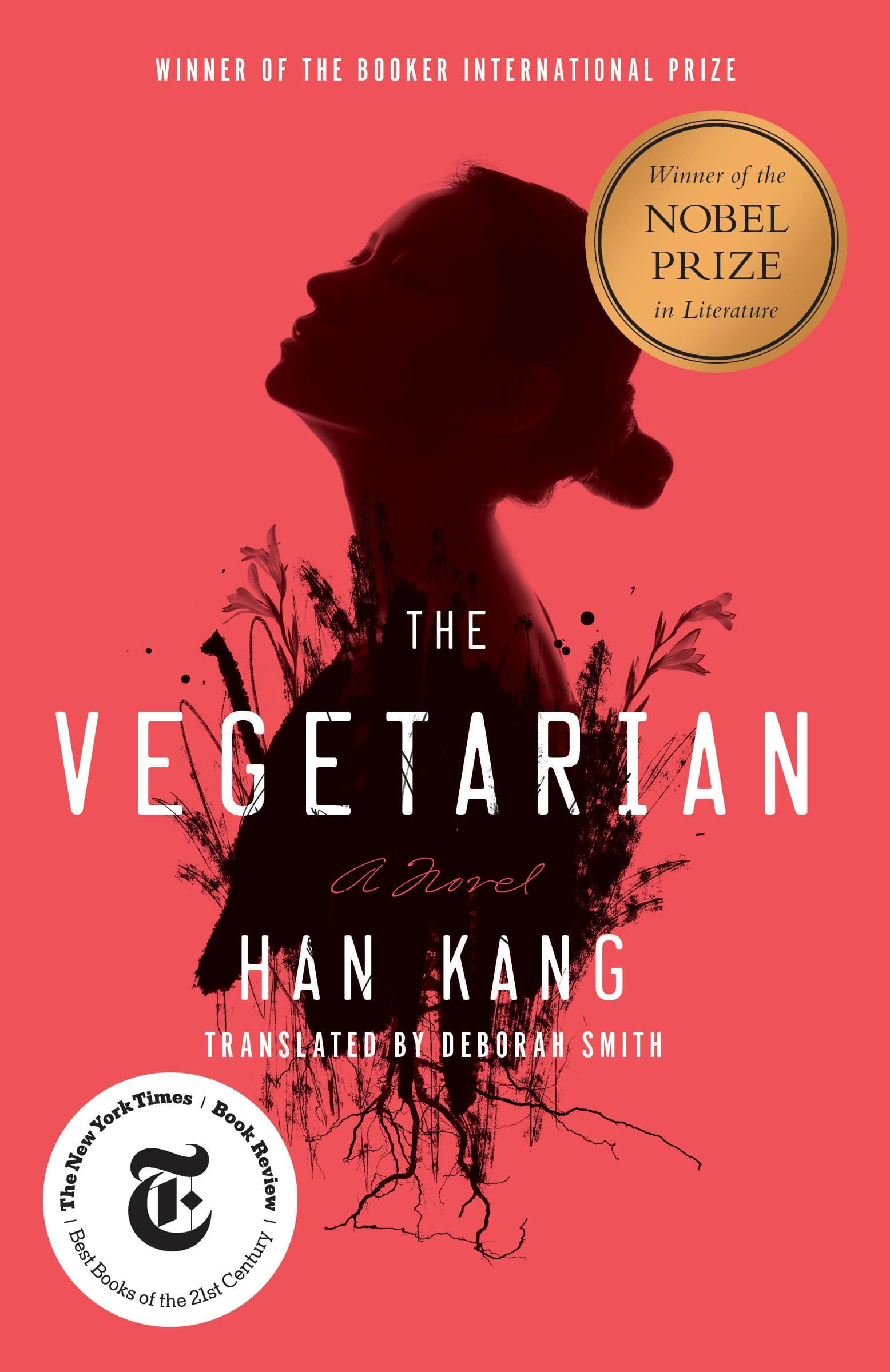
The Vegetarian
by Han Kang
Literary Fiction
Psychological
Surreal
188 Pages
"Slim and spiky and extremely disturbing, The Vegetarian insists on the reader's attention with its hypnotically serene atmosphere interrupted by surreal images and frighteningly recognizable moments of ordinary despair."
Synopsis
Yeong-hye and her husband lived an ordinary, unremarkable life in modern-day Seoul until the nightmares began. Invasive dreams of blood and brutality torment her, driving Yeong-hye to make what seems like a simple decision: she will no longer eat meat. In meat-loving South Korea, this small act of independence becomes a shocking rebellion. Her husband views it as an inconvenience and embarrassment. Her family sees it as madness that must be corrected. What begins as passive resistance transforms into something far more disturbing as Yeong-hye's husband, brother-in-law, and sister each attempt to reassert control over her body and mind. Their increasingly desperate and invasive interventions push Yeong-hye deeper into her own psychological landscape, where she retreats into dreams of transformation. As her obsession with becoming plant-like intensifies, the boundaries between reality and fantasy blur, leading to a series of events both grotesque and transcendent. Told through three distinct perspectives over three connected novellas, this haunting story explores the violence embedded in ordinary life and one woman's extreme attempt to escape it.
Our Take
Winner of the 2016 Man Booker International Prize and written by 2024 Nobel Prize laureate Han Kang, The Vegetarian is a slim but devastatingly powerful exploration of bodily autonomy, patriarchal control, and the violence inherent in everyday life. Translated brilliantly by Deborah Smith, the novel's three-part structure allows Han to examine Yeong-hye's transformation through the eyes of those who seek to control her, creating an intentionally unsettling distance from the protagonist's inner world. The prose moves between cool detachment and visceral intensity, echoing Kafka's surreal transformations while remaining rooted in the specific cultural pressures of contemporary South Korea. This isn't really a book about vegetarianism—it's a profound meditation on the impossibility of innocence in a violent world, the ways women's bodies become battlegrounds, and the price of attempting radical resistance. Readers drawn to Ottessa Moshfegh's My Year of Rest and Relaxation, Sayaka Murata's Convenience Store Woman, or Carmen Maria Machado's explorations of body horror will find Han Kang's vision equally unforgettable. Brief but haunting, The Vegetarian lingers long after the final page, asking difficult questions about sanity, control, and what it means to truly choose for oneself.