Classics

Recent Content

Say You'll Remember Me

Say You'll Remember Me

Say You'll Remember Me by Abby Jimenez: A veterinarian meets his match in a woman who can't commit—but their connection refuses to fade.

Read more
Hemlock & Silver

Hemlock & Silver

Hemlock & Silver by T. Kingfisher: A dark Snow White retelling where a poison-drinking healer must save a dying princess from magical threats.

Read more
Blacktop Wasteland

Blacktop Wasteland

Blacktop Wasteland by S.A. Cosby: A reformed getaway driver is pulled back into crime for one last heist that goes catastrophically wrong.

Read more
Checkout 19

Checkout 19

Checkout 19 by Claire-Louise Bennett: A radical novel about a young woman discovering her creative genius through books, people, and imagination.

Read more
Say Nothing

Say Nothing

Say Nothing by Patrick Radden Keefe: The mesmerizing true story of a mother's murder and Northern Ireland's Troubles and their aftermath.

Read more
See All Content
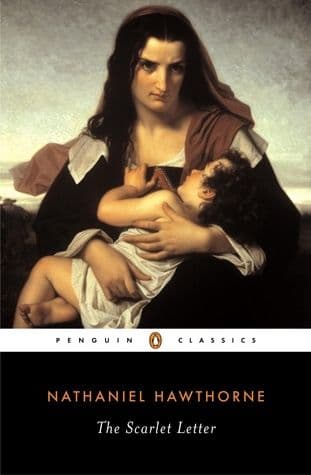
The Scarlet Letter book cover

The Scarlet Letter

by Nathaniel Hawthorne

Historical Fiction
Romance
Symbolism
279 Pages

"The Scarlet Letter was my introduction to how literature can critique society. Hester Prynne stands as one of literature's first truly feminist characters—a woman who accepts society's punishment but refuses to let it define her inner life."

Synopsis

The Scarlet Letter is set in Puritan Boston in the mid-17th century and begins with Hester Prynne standing on a scaffold, holding her infant daughter Pearl, while wearing the scarlet letter "A" for adultery. Her husband, presumed lost at sea, suddenly appears in the crowd as a stranger now calling himself Roger Chillingworth. He forces Hester to keep his identity secret while he investigates who fathered her child. Chillingworth suspects Arthur Dimmesdale, the young minister whose health is mysteriously deteriorating, and arranges to live with him as his physician. Meanwhile, Hester supports herself and Pearl through needlework while living as an outcast on the outskirts of town. Despite her punishment, she maintains her dignity and gradually earns a measure of respect through her charitable works. As years pass, Chillingworth's obsession with revenge transforms him into a malevolent figure, while Dimmesdale is consumed by guilt over his undisclosed sin. After Dimmesdale and Hester meet secretly in the forest and plan to flee to Europe together, Chillingworth discovers their plan. Before they can escape, Dimmesdale, in a final act of public confession, reveals the scarlet letter carved into his own chest, acknowledges Pearl as his daughter, and dies in Hester's arms. Chillingworth, having lost the object of his revenge, dies shortly after, leaving his fortune to Pearl. Years later, Hester returns to Boston, voluntarily resumes wearing the scarlet letter, and becomes a trusted counselor to women in distress.

Our Take

The Scarlet Letter stands as America's first great symbolic novel, establishing a uniquely American literary tradition that would later influence writers from Melville to Morrison. Hawthorne's genius lies in his psychological depth and moral complexity—rather than creating a simple tale of persecution, he explores how external punishment affects the inner lives of all involved: the publicly shamed but internally liberated Hester, the respected but secretly tormented Dimmesdale, and the outwardly scholarly but inwardly vengeful Chillingworth. The novel's enduring power comes from Hawthorne's refusal to offer easy moral judgments; instead, he shows how Puritan society's rigid moral code produces hypocrisy while suggesting that authentic virtue emerges not from conformity but from honest self-reckoning. The scarlet letter itself becomes one of literature's most multifaceted symbols, representing not just punishment but transformation—beginning as a mark of shame but evolving into a symbol of identity, strength, and even a kind of sacred experience. Hester Prynne remains a revolutionary character in American literature, neither a victim nor a pure heroine, but a complex woman who builds a meaningful life despite social rejection. Beyond its character studies, the novel offers a profound exploration of America's Puritan heritage and its consequences: the tension between individual freedom and community norms, the relationship between sin and creativity, and the hypocrisy that can lurk beneath moral certainty. Though Hawthorne's ornate 19th-century prose style can challenge modern readers, his psychological insights and moral questioning remain strikingly contemporary.


Related Content

Terms and ConditionsDo Not Sell or Share My Personal InformationPrivacy PolicyPrivacy NoticeAccessibility NoticeUnsubscribe
Copyright © 2026 Plot Digest