Classics

Recent Content

Say You'll Remember Me

Say You'll Remember Me

Say You'll Remember Me by Abby Jimenez: A veterinarian meets his match in a woman who can't commit—but their connection refuses to fade.

Read more
Hemlock & Silver

Hemlock & Silver

Hemlock & Silver by T. Kingfisher: A dark Snow White retelling where a poison-drinking healer must save a dying princess from magical threats.

Read more
Blacktop Wasteland

Blacktop Wasteland

Blacktop Wasteland by S.A. Cosby: A reformed getaway driver is pulled back into crime for one last heist that goes catastrophically wrong.

Read more
Checkout 19

Checkout 19

Checkout 19 by Claire-Louise Bennett: A radical novel about a young woman discovering her creative genius through books, people, and imagination.

Read more
Say Nothing

Say Nothing

Say Nothing by Patrick Radden Keefe: The mesmerizing true story of a mother's murder and Northern Ireland's Troubles and their aftermath.

Read more
See All Content
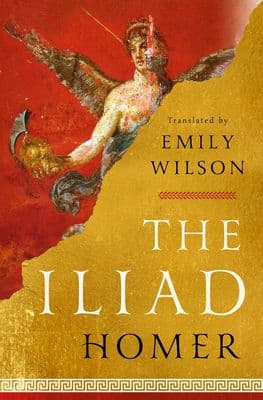
The Iliad book cover

The Iliad

by Homer

Epic Poetry
War
Mythology
848 Pages

"The Iliad isn't just ancient literature—it's the foundation of Western storytelling. What struck me most was how psychologically modern it feels, presenting warfare as simultaneously glorious and horrific, with characters whose pride, rage, and grief feel startlingly contemporary."

Synopsis

The Iliad recounts the events of a few weeks during the tenth and final year of the Trojan War, focusing on the rage of the Greek hero Achilles. The epic begins with Achilles' withdrawal from battle after King Agamemnon dishonors him by taking his war prize, the maiden Briseis. Achilles prays to his mother, the goddess Thetis, to convince Zeus to aid the Trojans, thereby demonstrating how crucial Achilles is to the Greek cause. As the Trojans gain advantage, the Greek commanders, including Odysseus and Ajax, attempt to persuade Achilles to return to battle, offering valuable gifts, but he refuses. His closest friend, Patroclus, borrows Achilles' armor to lead the Greeks and is killed by the Trojan prince Hector. Consumed by grief and rage, Achilles returns to battle, slaughters many Trojans, and ultimately kills Hector, whose body he drags behind his chariot and refuses to release for proper burial. The epic concludes with King Priam of Troy coming to Achilles' camp to beg for his son's body. Moved by Priam's grief, which connects to his own pain, Achilles relents, allowing Hector to receive funeral rites. The poem ends with Hector's funeral, though readers know that Troy's fall and Achilles' death lie in the near future.

Our Take

The Iliad stands as perhaps literature's most profound examination of war, simultaneously celebrating martial glory while unflinchingly depicting its devastating human cost. Composed nearly three millennia ago, Homer's epic established literary techniques and themes that still define Western storytelling: complex, flawed heroes; the interplay between human free will and divine influence; the transformative power of intense emotion; and the tension between individual excellence and communal responsibility. What makes the poem enduringly powerful is its refusal to present a simplistic moral universe—there are no true villains, only humans (and gods) driven by recognizable passions. Homer's psychological insight is remarkable: Achilles' rage stems from wounded honor, Hector fights knowing he will lose, and even minor characters receive moments that illuminate their humanity. The poem's battle scenes combine stylized formulaic elements with visceral specificity, often naming obscure hometowns and family connections of warriors just as they die, creating a poignant reminder of individual lives cut short. Perhaps most surprising to modern readers is the poem's conclusion, which transcends tribal loyalties as Achilles and Priam—bitter enemies—share a moment of profound connection through their common experience of loss. This scene, with its recognition of shared humanity across enemy lines, offers a glimpse of empathy emerging from the crucible of suffering. Across translations and centuries, The Iliad continues to speak to fundamental aspects of human experience: the desire for recognition, the complexity of honor, the devastating consequences of unchecked rage, and the universal experience of mortality that unites even the fiercest opponents.

Related Content

Terms and ConditionsDo Not Sell or Share My Personal InformationPrivacy PolicyPrivacy NoticeAccessibility NoticeUnsubscribe
Copyright © 2026 Plot Digest