Classics

Recent Content

Say You'll Remember Me

Say You'll Remember Me

Say You'll Remember Me by Abby Jimenez: A veterinarian meets his match in a woman who can't commit—but their connection refuses to fade.

Read more
Hemlock & Silver

Hemlock & Silver

Hemlock & Silver by T. Kingfisher: A dark Snow White retelling where a poison-drinking healer must save a dying princess from magical threats.

Read more
Blacktop Wasteland

Blacktop Wasteland

Blacktop Wasteland by S.A. Cosby: A reformed getaway driver is pulled back into crime for one last heist that goes catastrophically wrong.

Read more
Checkout 19

Checkout 19

Checkout 19 by Claire-Louise Bennett: A radical novel about a young woman discovering her creative genius through books, people, and imagination.

Read more
Say Nothing

Say Nothing

Say Nothing by Patrick Radden Keefe: The mesmerizing true story of a mother's murder and Northern Ireland's Troubles and their aftermath.

Read more
See All Content
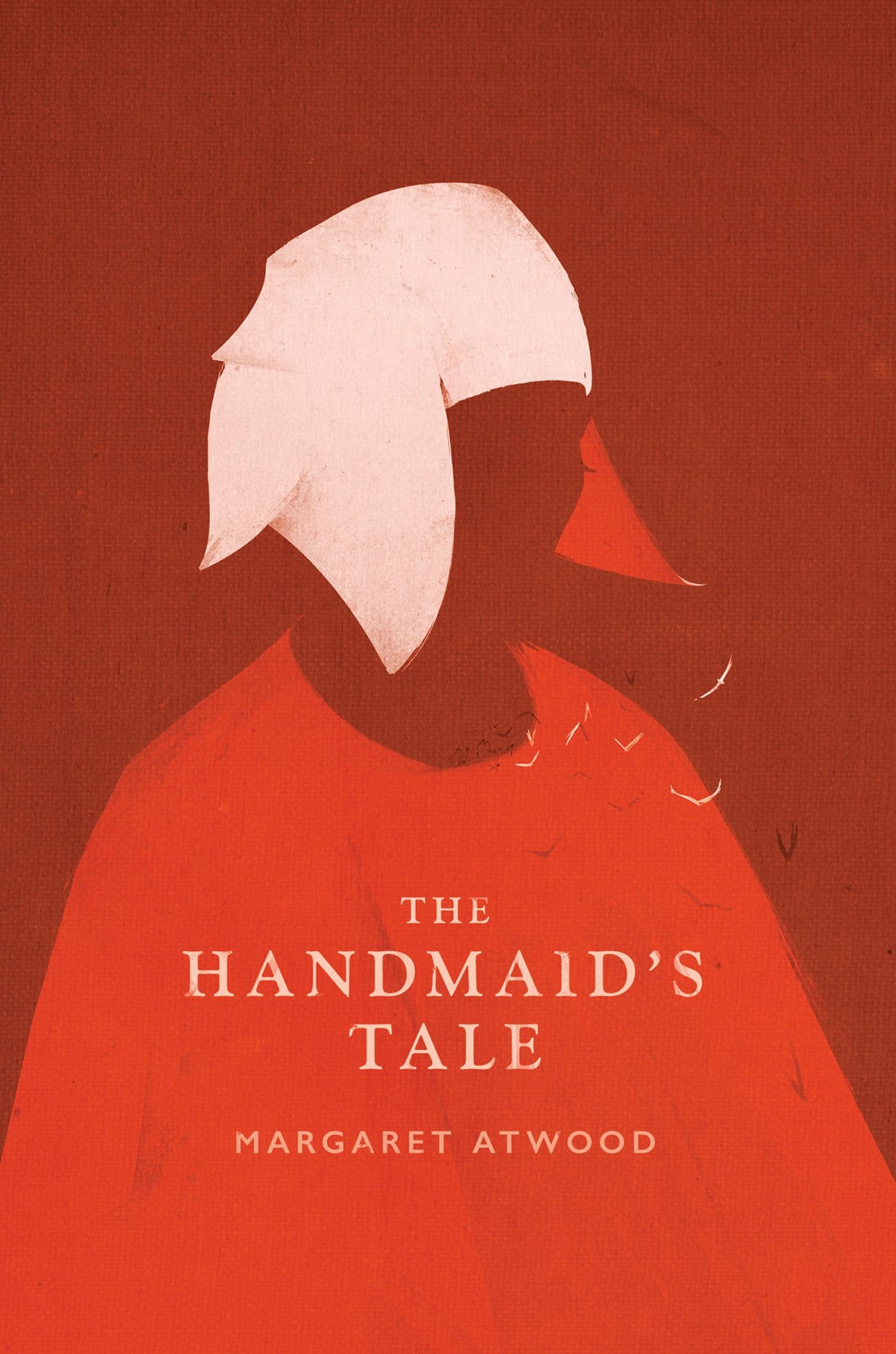
The Handmaid's Tale book cover

The Handmaid's Tale

by Margaret Atwood

Dystopian
Feminist
Speculative Fiction
320 Pages

"The Handmaid's Tale terrifies me because Atwood shows how quickly rights can be stripped away when we're not vigilant. Offred's voice—observant, intelligent, and grimly ironic—makes the horror all the more palpable because she remembers what freedom felt like."

Synopsis

The Handmaid's Tale is set in a near-future New England in the totalitarian, Christian fundamentalist state of Gilead, which has overthrown the United States government. The novel follows Offred, a Handmaid in the Commander's household whose function is to bear children for the Commander and his infertile wife, Serena Joy, through ritualized sexual encounters. In this society of severely reduced birthrates, fertile women are treated as property of the state and categorized by function: Wives (of Commanders), Marthas (domestic servants), Aunts (trainers and overseers of Handmaids), and Handmaids (reproductive surrogates). Through flashbacks, we learn that Offred—a name indicating she belongs to Commander Fred—once had her own name, a husband named Luke, a daughter, a job, and money of her own before the coup that established Gilead. The narrative tracks her complex relationships in the Commander's household, including her required sexual service, the Commander's secret desire for forbidden intimacy, Serena Joy's resentment, and her partnership with Ofglen, another Handmaid who belongs to a resistance movement. When Ofglen's involvement with the resistance is discovered, and Serena Joy learns of Offred's illicit relationship with the Commander, Offred awaits punishment but is instead told that men from the resistance have come to save her. The novel concludes ambiguously, followed by an epilogue set in 2195, where scholars discuss Offred's account, which had been recorded on cassette tapes, suggesting that Gilead eventually fell.

Our Take

The Handmaid's Tale ranks among the most influential dystopian novels ever written, notable for Atwood's insistence that she included "nothing that humans haven't already done in some time or place." This grounding in historical precedent gives the novel its chilling plausibility—Gilead doesn't require futuristic technology or alien invasion, just a steady erosion of rights justified by crisis and ideology. What makes Atwood's vision particularly compelling is how she explores the complexity of power beyond simple oppressor/oppressed dichotomies, examining how regimes co-opt women into enforcing patriarchal systems and how small resistances and accommodations shape life under totalitarianism. Offred's first-person narration creates the novel's most distinctive feature: a voice that combines acute observation, dark humor, and fragments of memory that serve as both emotional lifeline and political resistance. Through her limited perspective, the reader experiences the psychological effects of living under constant surveillance and the struggle to maintain an authentic self when identity is systematically erased. Beyond its feminist themes, the novel offers a sophisticated analysis of how language can be manipulated to restructure reality, how environmental crisis can trigger authoritarian response, and how religious texts can be selectively interpreted to justify oppression. The epilogue's academic conference, set centuries later, adds another layer of complexity, suggesting that even Offred's testimony becomes subject to male interpretation and scholarly debate. Though published in 1985, The Handmaid's Tale continues to resonate powerfully as a warning about complacency in the face of extremism and the fragility of democratic institutions when freedom is traded for security.


Related Content

Terms and ConditionsDo Not Sell or Share My Personal InformationPrivacy PolicyPrivacy NoticeAccessibility NoticeUnsubscribe
Copyright © 2026 Plot Digest