Classics

Recent Content

Say You'll Remember Me

Say You'll Remember Me

Say You'll Remember Me by Abby Jimenez: A veterinarian meets his match in a woman who can't commit—but their connection refuses to fade.

Read more
Hemlock & Silver

Hemlock & Silver

Hemlock & Silver by T. Kingfisher: A dark Snow White retelling where a poison-drinking healer must save a dying princess from magical threats.

Read more
Blacktop Wasteland

Blacktop Wasteland

Blacktop Wasteland by S.A. Cosby: A reformed getaway driver is pulled back into crime for one last heist that goes catastrophically wrong.

Read more
Checkout 19

Checkout 19

Checkout 19 by Claire-Louise Bennett: A radical novel about a young woman discovering her creative genius through books, people, and imagination.

Read more
Say Nothing

Say Nothing

Say Nothing by Patrick Radden Keefe: The mesmerizing true story of a mother's murder and Northern Ireland's Troubles and their aftermath.

Read more
See All Content
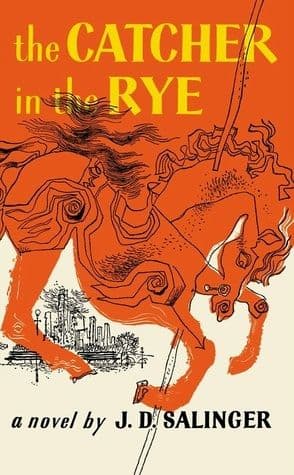
The Catcher in the Rye book cover

The Catcher in the Rye

by J.D. Salinger

Coming-of-Age
Literary Fiction
Psychological
277 Pages

"Reading The Catcher in the Rye as a teenager changed everything—Holden's voice was the first time I felt like a book understood my adolescent alienation and confusion."

Synopsis

The Catcher in the Rye follows 16-year-old Holden Caulfield over three days after he has been expelled from Pencey Prep, a prestigious boarding school. Rather than returning home immediately to face his parents, Holden decides to spend a few days alone in New York City. As he wanders the city, he encounters various acquaintances and strangers while struggling with feelings of alienation, concerns about growing up, and grief over the death of his younger brother Alec. Throughout his journey, Holden's cynical worldview—especially his hatred of what he sees as adult "phoniness"—is juxtaposed with moments of genuine connection, particularly in his interactions with his sister Phoebe. The novel's title refers to Holden's misinterpretation of a Robert Burns poem and his fantasy of protecting children from losing their innocence by catching them before they fall from a cliff—a metaphor for his own fear of adulthood.

Our Take

The Catcher in the Rye has become the quintessential portrait of adolescent alienation for good reason—few novels capture so authentically the specific voice and consciousness of a teenager caught between childhood and adulthood. Salinger's greatest achievement is Holden's narrative voice, which remains one of the most distinctive in American literature: colloquial, digressive, alternately cynical and vulnerable, and utterly convincing as the expression of a bright but troubled young mind. Beyond its stylistic innovation, the novel's enduring power lies in how it dramatizes universal aspects of adolescence—the sense of being misunderstood, the critical eye turned toward adult hypocrisy, and the painful process of losing innocence while desperately trying to preserve it. What elevates The Catcher in the Rye above mere teen angst is Salinger's compassionate understanding of Holden's grief and trauma, presenting his alienation not as simple rebellion but as a complex response to loss and fear. Despite generational changes in language and culture, the novel continues to resonate with readers because the emotional landscape of adolescence remains fundamentally unchanged.

Related Content

Terms and ConditionsDo Not Sell or Share My Personal InformationPrivacy PolicyPrivacy NoticeAccessibility NoticeUnsubscribe
Copyright © 2026 Plot Digest