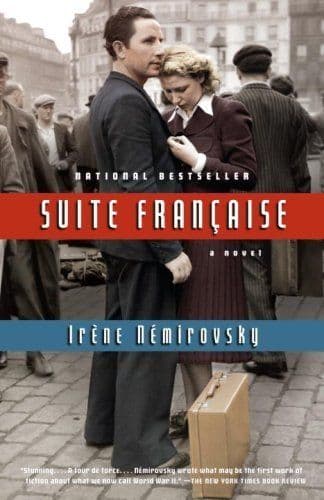
Our Take
The story of how Suite Française came to exist is extraordinary enough on its own — but the novel itself more than earns its place as a canonical work of twentieth-century literature. What's most astonishing is Némirovsky's refusal to moralize. Writing in real time, with no distance from the events she was depicting, she manages a sweep of perspective that feels almost impossible: she inhabits collaborators and resisters, the privileged and the desperate, with equal clarity and surprising compassion.
"A Storm in June" has the propulsive, kaleidoscopic energy of a great ensemble novel, cutting between characters whose lives briefly intersect under catastrophic pressure. "Dolce" is quieter and, in many ways, more devastating — a study in how occupation seeps into the texture of everyday life, distorting relationships and eroding identity gradually rather than all at once.
Readers drawn to Sarah's Key by Tatiana de Rosnay or The Nightingale by Kristin Hannah for their depictions of wartime France will find Suite Française operates on an entirely different register — more literary, more morally complex, and written by someone who was there. Unmissable.