
Our Take
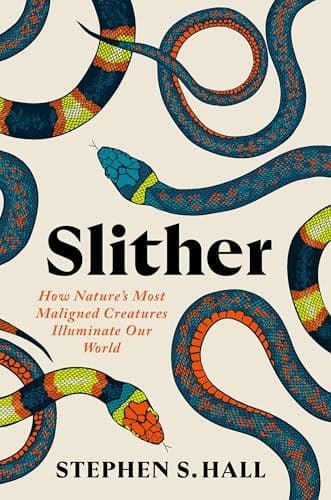
Stephen S. Hall, an acclaimed science writer whose previous works explored neuroscience and longevity, brings his gift for making complex science accessible to this ambitious exploration of humanity's relationship with snakes. Slither succeeds brilliantly as both natural history and cultural anthropology, revealing how our reactions to snakes are hardwired into our brains—a legacy of primate evolution—while also examining how different cultures have interpreted these limbless predators. Hall structures each chapter around a biological feature of snakes, then radiates outward to explore mythology, art, and symbolism, creating a rich tapestry that connects Eden's serpent to modern venom research laboratories. The book's most fascinating sections detail cutting-edge science: how researchers are using snake venom proteins to develop new medications, how thermal imaging reveals snakes' sophisticated sensory capabilities, and how genomic studies are rewriting our understanding of snake evolution. Hall writes with infectious enthusiasm tempered by scientific rigor, never anthropomorphizing while still conveying snakes' remarkable adaptations. He interviews herpetologists, toxinologists, and indigenous peoples who live alongside deadly serpents, building a comprehensive portrait of these creatures from multiple perspectives. The book challenges our instinctive revulsion by revealing snakes' ecological importance, behavioral complexity, and potential contributions to medicine. Readers who loved Merlin Sheldrake's Entangled Life or Ed Yong's An Immense World will appreciate Hall's ability to make us see familiar creatures with fresh eyes. For anyone curious about evolution, animal behavior, or simply wanting to understand why snakes simultaneously terrify and mesmerize us, Slither is captivating science writing that transforms fear into fascination.