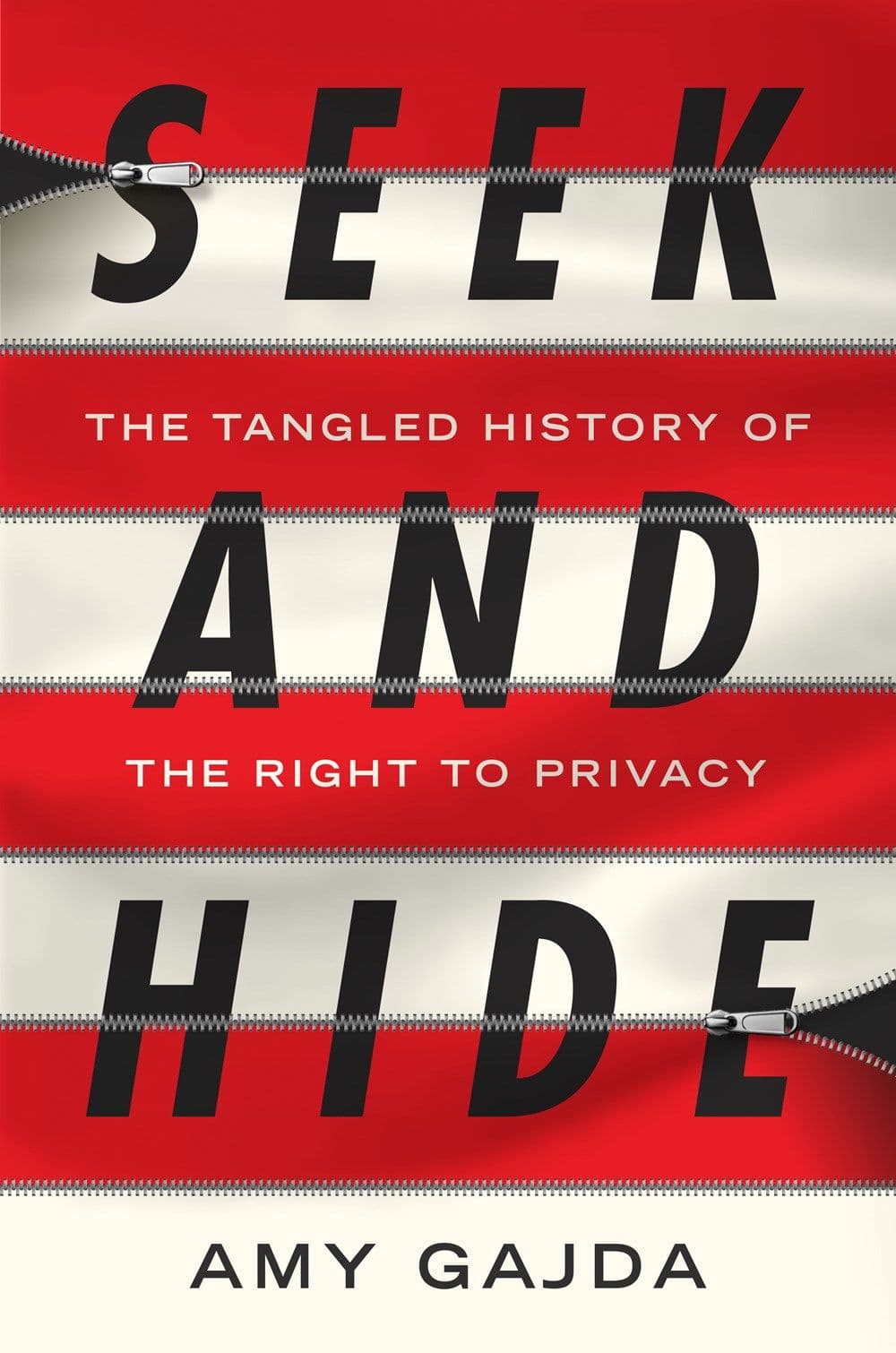
Seek and Hide
by Amy Gajda
History
Law
Technology
400 Pages
"Gajda brilliantly exposes the double-edged sword of privacy rights—essential for protecting ordinary people, yet weaponized by the powerful to evade accountability and suppress truth."
Synopsis
The surprising story of the fitful development of the right to privacy and its ongoing battle against the public's right to know across American history. From constraining tech companies like Facebook from exploiting personal data to preventing Alexa from spying on us, privacy dominates contemporary debates. It has provoked constitutional crises over presidential tax returns while Justice Clarence Thomas seeks to remove protections for journalists who publish truth about public officials. Is privacy under deadly siege or actually surging? Legal expert Amy Gajda proves the answer is both, and that's doubly dangerous. Too little privacy means unwanted exposure by those who traffic in secrets. Too much means the powerful can cloak themselves in secrecy and shut down inquiry, returning us to the time before movements like Black Lives Matter and Me Too opened eyes to hidden truths. Seek and Hide carries us from the Gilded Age, when the concept of a right to privacy first entered American law, to now, when the law allows billionaires like Peter Thiel to destroy media outlets like Gawker out of spite. Disturbingly, Gajda shows that the original concern wasn't about protecting ordinary people but shielding the wealthy from popular press scrutiny. The book traces Louis Brandeis's landmark 1890 essay through the glory days of investigative journalism during Vietnam and Watergate to today's full-blown crisis in the digital age. This timely work reminds us that calls for privacy, however innocent they seem, can restrict essential democratic freedoms—because they already have.
Our Take
Amy Gajda, a legal scholar and journalist, delivers a revelatory history that fundamentally reframes how we understand privacy rights in America. Her central insight is brilliantly counterintuitive: privacy protections were originally designed not to protect ordinary citizens from intrusion but to shield wealthy elites from embarrassing press coverage. This legacy continues today, as billionaires weaponize privacy law to silence journalists while simultaneously tech companies exploit our data with impunity. Gajda skillfully traces this paradox from Gilded Age robber barons through Louis Brandeis's influential writings to Peter Thiel's destruction of Gawker, showing how privacy law has always served dual, often contradictory purposes. Her analysis is particularly urgent given contemporary debates about social media regulation, presidential transparency, and press freedom. The book's greatest strength is its refusal to offer easy answers—Gajda acknowledges we need both privacy protections and transparency, even as she demonstrates how difficult balancing these imperatives has proven throughout history. Readers who appreciated Shoshana Zuboff's The Age of Surveillance Capitalism or Timothy Wu's The Attention Merchants will find Gajda's historical perspective illuminating. For anyone concerned about Big Tech, press freedom, or the future of accountability in democracy, Seek and Hide is essential reading that transforms how we think about privacy's role in American life.