Fiction

Recent Content

Say You'll Remember Me

Say You'll Remember Me

Say You'll Remember Me by Abby Jimenez: A veterinarian meets his match in a woman who can't commit—but their connection refuses to fade.

Read more
Hemlock & Silver

Hemlock & Silver

Hemlock & Silver by T. Kingfisher: A dark Snow White retelling where a poison-drinking healer must save a dying princess from magical threats.

Read more
Blacktop Wasteland

Blacktop Wasteland

Blacktop Wasteland by S.A. Cosby: A reformed getaway driver is pulled back into crime for one last heist that goes catastrophically wrong.

Read more
Checkout 19

Checkout 19

Checkout 19 by Claire-Louise Bennett: A radical novel about a young woman discovering her creative genius through books, people, and imagination.

Read more
Say Nothing

Say Nothing

Say Nothing by Patrick Radden Keefe: The mesmerizing true story of a mother's murder and Northern Ireland's Troubles and their aftermath.

Read more
See All Content
logo
  • Fiction
  • Mystery & Thriller
  • Fantasy & Sci-Fi
  • Non-Fiction
  • Other Genres
  • About Us
  • Fiction
  • Mystery & Thriller
  • Fantasy & Sci-Fi
  • Non-Fiction
  • Other Genres
  • About Us
  • ​
    ​
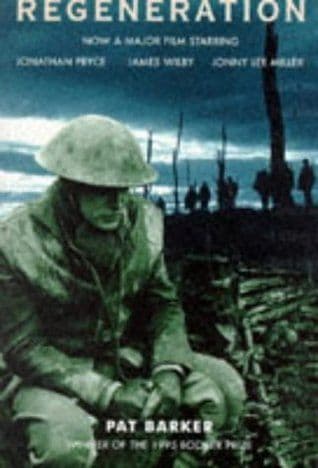
Regeneration book cover

Regeneration

by Pat Barker

Historical Fiction
War Fiction
256 Pages

"Barker's portrayal of trauma and healing is both heartbreaking and hopeful—a masterpiece that changed how I think about war's true cost."

Synopsis

Set in 1917 at Craiglockhart Hospital in Scotland, Regeneration follows the revolutionary work of psychiatrist W.H.R. Rivers as he treats British officers suffering from shell shock and other war-related psychological trauma. Among his patients are real historical figures including the war poets Siegfried Sassoon and Wilfred Owen, alongside fictional characters who represent the countless soldiers struggling to reconcile their experiences of war with society's expectations of masculine courage. Rivers employs groundbreaking therapeutic techniques, encouraging his patients to confront their memories rather than simply forget them, while grappling with his own conflicted feelings about sending recovered men back to the front lines. The novel explores the complex relationship between doctor and patient, particularly focusing on Rivers' treatment of Sassoon, who has been sent to the hospital not for breakdown but for his public declaration against the continuation of the war. Regeneration examines themes of duty, conscience, and the psychological cost of warfare, while questioning the definitions of sanity and madness in a world gone mad with violence. Through intimate conversations and therapy sessions, Barker reveals how trauma affects not only the soldiers but also those tasked with healing them, creating a powerful meditation on the nature of recovery, the ethics of treatment, and the broader social forces that shape individual suffering.

Our Take

Regeneration stands as one of the finest examples of historical fiction's power to illuminate both past and present, earning Pat Barker the Booker Prize and establishing her as a master of psychological realism. Barker's meticulous research into early psychiatric treatment and her deep understanding of trauma create a novel that feels both historically authentic and remarkably contemporary in its insights about mental health. Her portrayal of Rivers as a compassionate but conflicted healer who must balance individual care with institutional demands resonates strongly with modern discussions about therapy, ethics, and the medicalization of psychological distress. The book's exploration of masculinity, duty, and the social construction of mental illness echoes the psychological depth found in All Quiet on the Western Front by Erich Maria Remarque and The Ghost Road by Pat Barker herself, but with a unique focus on healing rather than just destruction. Barker's prose is precise and understated, allowing the emotional weight of her characters' experiences to emerge naturally without melodrama. The novel's integration of real historical figures with fictional characters creates a rich tapestry that honors both individual experience and broader historical truth. Essential reading for anyone interested in World War I literature, the history of psychology, or powerful explorations of how societies and individuals cope with collective trauma.

Related Content

Terms and ConditionsDo Not Sell or Share My Personal InformationPrivacy PolicyPrivacy NoticeAccessibility NoticeUnsubscribe
Copyright © 2026 Plot Digest