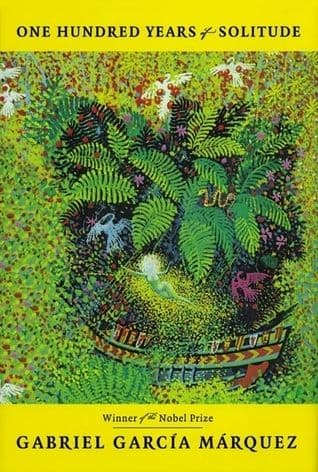
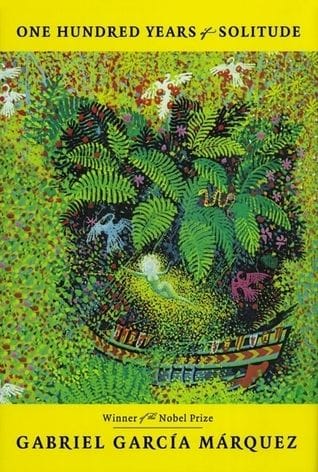
One Hundred Years of Solitude
by Gabriel García Márquez
Magical Realism
Historical Fiction
Epic
417 Pages
"Reading One Hundred Years of Solitude is like entering a dream from which you never want to wake—a world where the extraordinary becomes ordinary and reality itself bends to the power of myth and memory."
Synopsis
One Hundred Years of Solitude chronicles seven generations of the Buendía family in the fictional town of Macondo, founded by José Arcadio Buendía and his wife Úrsula Iguarán. The novel begins with Macondo's isolation from the outside world and follows its evolution through periods of prosperity, war, revolution, and eventual decline. Throughout, the Buendía family experiences a cyclical pattern of traits and events: the men tend to be either adventurous José Arcadios or contemplative Aurelianos; incest and its consequences recur; and characters experience prophetic dreams and supernatural occurrences. The family's patriarch is driven mad by solitude; his son Colonel Aureliano Buendía fights in thirty-two civil wars without victory; another descendant, Remedios the Beauty, ascends to heaven while folding laundry. As Macondo develops, it encounters technological marvels, a banana plantation that brings temporary prosperity, and a massacre of workers that the town collectively forgets. The family's destiny is guided by an ancient manuscript written by the gypsy Melquíades, which the last Buendía finally deciphers, revealing that the family's history—and Macondo itself—will be wiped from memory once the manuscript is understood.
Our Take
One Hundred Years of Solitude transcends ordinary literary categorization—it's simultaneously a family saga, a national allegory, a mythical origin story, and a profound meditation on time and history. García Márquez's masterpiece revolutionized world literature through its perfect synthesis of Latin American magical realism, where the supernatural exists alongside the mundane without contradiction. The novel's most remarkable achievement is its narrative voice—an omniscient, matter-of-fact tone that presents flying carpets and plagues of insomnia with the same straightforward authority as political upheavals and technological innovations. This narrative approach mirrors how myth, memory, and history blend in oral traditions and collective consciousness. Beyond its stylistic brilliance, the novel offers a complex portrait of Latin American history, particularly Colombia's, where cycles of violence, foreign exploitation, and erased atrocities reflect actual historical patterns. The recurring names and traits of the Buendía family create a sense of circular time that challenges Western notions of linear progress. Despite the family's ultimate extinction, the novel itself stands as an act of literary preservation, rescuing from oblivion the voices and experiences that official histories often neglect. Few works of fiction have so profoundly influenced how we understand the relationship between memory, imagination, and historical truth.