Classics

Recent Content

Say You'll Remember Me

Say You'll Remember Me

Say You'll Remember Me by Abby Jimenez: A veterinarian meets his match in a woman who can't commit—but their connection refuses to fade.

Read more
Hemlock & Silver

Hemlock & Silver

Hemlock & Silver by T. Kingfisher: A dark Snow White retelling where a poison-drinking healer must save a dying princess from magical threats.

Read more
Blacktop Wasteland

Blacktop Wasteland

Blacktop Wasteland by S.A. Cosby: A reformed getaway driver is pulled back into crime for one last heist that goes catastrophically wrong.

Read more
Checkout 19

Checkout 19

Checkout 19 by Claire-Louise Bennett: A radical novel about a young woman discovering her creative genius through books, people, and imagination.

Read more
Say Nothing

Say Nothing

Say Nothing by Patrick Radden Keefe: The mesmerizing true story of a mother's murder and Northern Ireland's Troubles and their aftermath.

Read more
See All Content
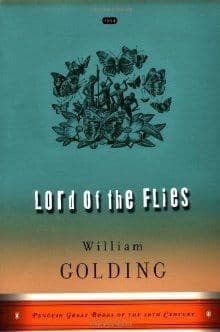
Lord of the Flies book cover

Lord of the Flies

by William Golding

Allegorical
Psychological
Dystopian
182 Pages

"Lord of the Flies destroyed my adolescent belief in human innocence. Years later, working in conflict zones, I've seen how quickly social norms can collapse and how thin the veneer of civilization really is."

Synopsis

Lord of the Flies follows a group of British schoolboys who are stranded on an uninhabited island after their plane crashes during evacuation from a war. Initially, the boys attempt to establish order and work toward rescue. They elect Ralph as their leader, though Jack, the head of the choir boys, covets leadership and is put in charge of hunting. Intellectual Piggy becomes Ralph's advisor, while the visionary Simon offers quiet wisdom. The boys establish a signal fire but become distracted by hunting and play. As time passes, many boys begin to believe there's a dangerous beast on the island. Jack becomes increasingly focused on hunting and breaks away to form his own tribe, which descends into savagery with painted faces and violent rituals. When Simon discovers that the "beast" is actually a dead parachutist, he attempts to tell the others but is mistaken for the beast himself and killed in a frenzy during a tribal dance. Piggy is later murdered by Roger, Jack's sadistic lieutenant, who drops a boulder on him. Ralph, now alone, is hunted by Jack's tribe, which sets the island on fire to flush him out. The novel concludes as Ralph, running for his life, stumbles onto the beach and encounters a British naval officer who has seen the smoke from the fire. Confronted with adult authority, the boys revert to children, weeping for "the end of innocence, the darkness of man's heart."

Our Take

Lord of the Flies stands as one of literature's most unsettling explorations of human nature, systematically dismantling romantic notions about childhood innocence and the inherent goodness of humanity. Written in the aftermath of World War II, Golding's masterpiece responds to earlier adventure stories like Coral Island (explicitly referenced in the novel's conclusion) that portrayed stranded British boys creating harmonious mini-societies. Instead, Golding draws on his experience as a schoolteacher and naval officer to create a darker vision of human behavior when freed from social constraints. The novel works on multiple levels: as a gripping adventure tale, as a political allegory about competing forms of governance (Ralph's democratic rationalism versus Jack's authoritarian tribalism), and as a psychological exploration of how fear, groupthink, and projection can overwhelm reason and moral principle. Each major character represents different aspects of human psychology: Piggy embodies intellect without charisma; Jack represents power divorced from wisdom; Simon offers spiritual insight without practical effectiveness; and Ralph embodies the struggle to maintain moral purpose against mounting chaos. Beyond its character dynamics, the novel's richly symbolic landscape—the island paradise that becomes increasingly threatening, the lord of the flies (a pig's head on a stake) as the externalization of inner darkness, the signal fire representing connection to civilization—creates a multilayered reading experience that continues to reward analysis. Though often challenged for its violence and pessimism, Lord of the Flies remains essential reading precisely because it confronts readers with uncomfortable truths about human nature while suggesting that self-awareness, though not sufficient to prevent atrocity, might be the beginning of wisdom.
Related Content

Terms and ConditionsDo Not Sell or Share My Personal InformationPrivacy PolicyPrivacy NoticeAccessibility NoticeUnsubscribe
Copyright © 2026 Plot Digest