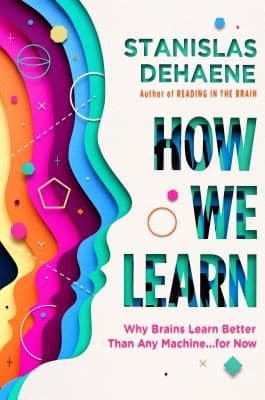
How We Learn
by Stanislas Dehaene
Science
Self-Help
Education
352 Pages
"This book completely changed how I approach learning new skills—it's like having a user manual for your own brain."
Synopsis
The human brain is an extraordinary learning machine with an unparalleled ability to reprogram itself, yet the process of learning remains something of a mystery to most of us. In How We Learn, renowned cognitive neuroscientist Stanislas Dehaene bridges computer science, neurobiology, and cognitive psychology to demystify how learning actually works. Dehaene explores the innate biological foundations that underlie our ability to acquire new information and identifies the key principles that make learning more or less efficient. Drawing on cutting-edge research and his own groundbreaking studies, he reveals the brain's remarkable learning algorithms and explains how these mechanisms function from infancy through adulthood. The book offers practical insights for applying this science in schools, universities, and everyday life, demonstrating that understanding the brain's natural learning processes can revolutionize how we teach and how we learn at any age. From the role of attention and active engagement to the power of sleep and consolidation, Dehaene provides a comprehensive guide to optimizing the brain's most fundamental capability.
Our Take
How We Learn is the rare science book that manages to be both intellectually rigorous and genuinely practical. Dehaene, one of the world's leading cognitive neuroscientists, takes what could be dense academic material and transforms it into an accessible exploration of the brain's most essential function. What sets this book apart is its perfect balance between hard science and real-world application—you'll come away understanding not just what happens when you learn, but how to leverage that knowledge immediately. The book dismantles common myths about learning styles and educational practices while offering evidence-based strategies that actually work. Dehaene's insights into the four pillars of learning—attention, active engagement, error feedback, and consolidation—provide a framework that applies whether you're a student, teacher, parent, or lifelong learner. For readers who loved Thinking, Fast and Slow by Daniel Kahneman or The Brain that Changes Itself by Norman Doidge, this book offers a focused deep-dive into one of cognition's most fundamental processes. It's essential reading for anyone committed to personal growth, educational reform, or simply understanding the remarkable organ between our ears.