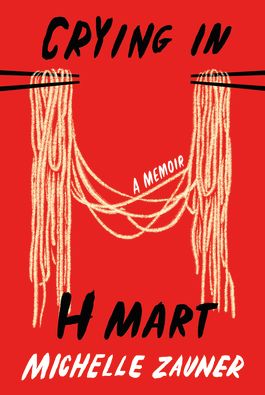
Crying in H Mart
by Michelle Zauner
Memoir
Personal Nonfiction
239 pages
"I didn't expect a memoir about grief to make me this hungry and this heartbroken at once. Crying in H Mart made me call my mom immediately after finishing it."
Synopsis
In the aisles of a Korean grocery store, Michelle Zauner is ambushed by memory: her mother's hands preparing banchan, the smell of doenjang, the particular way certain snacks tasted like home. Crying in H Mart traces Zauner's relationship with her Korean immigrant mother through the food that connected them, from childhood trips to Seoul to the devastating years when her mother is diagnosed with terminal cancer. As a musician navigating a fledgling career under the band name Japanese Breakfast, Zauner is forced to reckon with her identity, her guilt, and her grief all at once. Cooking becomes both a way to stay close to her mother's memory and a means of understanding a culture she fears losing access to. The stakes here aren't plot twists but something rawer: the question of who we become when the person who shaped our sense of self and heritage is gone, and whether food, memory, and language can hold that loss together. It's specific, unsentimental, and deeply moving.
Our Take
What sets Crying in H Mart apart from the crowded grief memoir shelf is how physical it is. Zauner writes about food the way some writers write about sex or violence, with total sensory commitment, and that specificity is what makes the grief land so hard. This isn't abstract mourning; it's mourning measured in kimchi jjigae and cold noodles, in the exact texture of a dish she can't quite recreate. If you loved the unflinching interiority of Maggie O'Farrell's I Am, I Am, I Am or the way H is for Hawk by Helen Macdonald uses an unconventional lens (falconry, in that case) to process loss, this will scratch a similar itch. It also shares DNA with Somebody's Daughter by Ashley C. Ford in its unsparing look at a complicated parent-child bond. Zauner, better known to many as the musician behind Japanese Breakfast, brings a songwriter's ear for rhythm to her prose. Chapters move fast, images recur and deepen, and there's an emotional directness that never tips into melodrama. It's a slim book that doesn't overstay its welcome, but it lingers anyway. If you've ever cooked a dead relative's recipe just to feel closer to them for twenty minutes, this one will wreck you a little, in the best way.