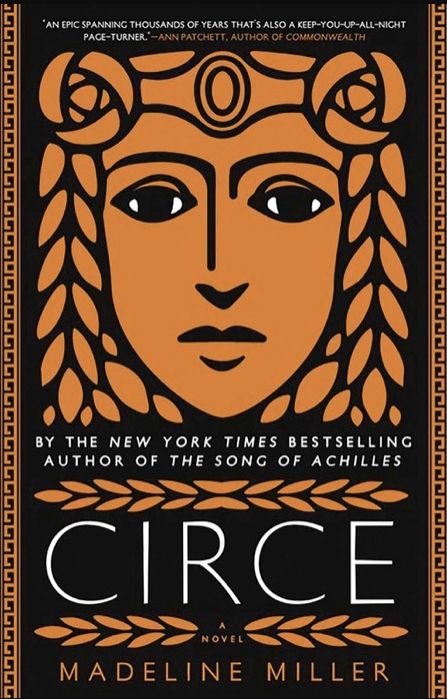
Circe
by Madeline Miller
Literary Fiction
Mythological Retelling
400 pages
"I went in expecting a myth retelling and came out feeling like I'd read the most honest story about self-invention. Circe made an ancient witch feel like someone I actually know."
Synopsis
On the sun-drenched island of Aiaia, exile becomes destiny in Madeline Miller's Circe. Born the strange, unlovely daughter of the sun god Helios, Circe is dismissed by her divine family until she discovers she possesses the forbidden power of witchcraft, the ability to transform men into beasts and bend nature to her will. Banished for this gift, she's cast alone onto a remote island where she must build a life from nothing. But isolation doesn't mean the world leaves her be. Legendary figures wash ashore, Daedalus, the Minotaur's family, a ship of doomed sailors, and eventually the wily Odysseus himself, each one pulling Circe deeper into the tangled politics of gods and mortals. As centuries pass, she must decide what kind of power she wants and who she owes loyalty to, her divine bloodline or the mortal world she's grown to love more. The stakes are nothing less than her own freedom, in a universe where gods punish independence and women are rarely allowed to choose their own fate.
Our Take
Madeline Miller does something genuinely rare here: she takes a minor, often maligned figure from Homer's margins and gives her a full interior life, without losing the strangeness and scale of myth itself. Circe's centuries-long arc, from spurned nymph to formidable witch, reads less like fantasy and more like a very long, very human coming-of-age story, one that just happens to include Scylla, the Minotaur, and Odysseus along the way. If you loved the emotional intimacy of Miller's own The Song of Achilles, this feels like a sister book, though Circe's story is quieter and more solitary by design. Fans of Pat Barker's The Silence of the Girls will recognize the same project of reclaiming a woman's voice from the epic's periphery, and readers who enjoyed the slow-burn transformation arc of Piranesi will appreciate how much of this book is about isolation shaping identity. What sets Miller apart is her prose, lush without being overwrought, and her refusal to make Circe purely sympathetic or purely powerful. She's prickly, lonely, occasionally cruel, and utterly convincing. This is myth retelling as character study, and it earns its emotional payoff by the final page.