Non-Fiction

Recent Content

Say You'll Remember Me

Say You'll Remember Me

Say You'll Remember Me by Abby Jimenez: A veterinarian meets his match in a woman who can't commit—but their connection refuses to fade.

Read more
Hemlock & Silver

Hemlock & Silver

Hemlock & Silver by T. Kingfisher: A dark Snow White retelling where a poison-drinking healer must save a dying princess from magical threats.

Read more
Blacktop Wasteland

Blacktop Wasteland

Blacktop Wasteland by S.A. Cosby: A reformed getaway driver is pulled back into crime for one last heist that goes catastrophically wrong.

Read more
Checkout 19

Checkout 19

Checkout 19 by Claire-Louise Bennett: A radical novel about a young woman discovering her creative genius through books, people, and imagination.

Read more
Say Nothing

Say Nothing

Say Nothing by Patrick Radden Keefe: The mesmerizing true story of a mother's murder and Northern Ireland's Troubles and their aftermath.

Read more
See All Content
logo
  • Fiction
  • Mystery & Thriller
  • Fantasy & Sci-Fi
  • Non-Fiction
  • Other Genres
  • About Us
  • Fiction
  • Mystery & Thriller
  • Fantasy & Sci-Fi
  • Non-Fiction
  • Other Genres
  • About Us
  • ​
    ​
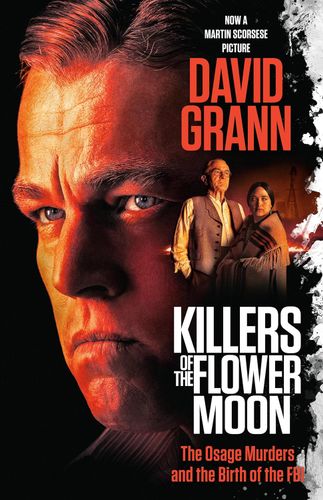
As Long as Grass Grows book cover

As Long as Grass Grows

by Dina Gilio-Whitaker

Social Justice
Politics
History
224 Pages

"As Long as Grass Grows completely transformed my understanding of environmental justice—Gilio-Whitaker's analysis is both rigorous and deeply necessary."

Synopsis

Environmental justice scholar Dina Gilio-Whitaker argues that the mainstream environmental justice movement has largely failed to address the unique struggles of Indigenous peoples, who face environmental racism rooted in colonialism and the ongoing denial of their sovereignty. Drawing on decades of research and activism, she demonstrates how environmental harms against Native communities are not simply examples of racism but are fundamentally tied to the settler colonial project that seeks to eliminate Indigenous peoples and claim their lands. The book examines landmark cases from Standing Rock to uranium mining on Navajo lands, showing how environmental destruction has been used as a tool of genocide and cultural erasure. Gilio-Whitaker critiques the traditional environmental justice framework for its focus on civil rights rather than sovereignty, arguing that true environmental justice for Indigenous peoples requires recognition of their inherent rights to their traditional territories. She explores how Indigenous communities have resisted environmental racism through assertions of sovereignty, traditional ecological knowledge, and direct action, often in alliance with environmental movements but always from their unique position as sovereign nations. The book also addresses the complexities of federal Indian law, treaty rights, and the ways that the US government's trust responsibility has been used both to protect and exploit Native lands. Throughout, Gilio-Whitaker weaves together scholarly analysis with personal narrative and community voices, creating a comprehensive examination of how environmental and social justice intersect with Indigenous rights. The work ultimately calls for a new understanding of environmental justice that centers Indigenous sovereignty and recognizes that the land struggles of Native peoples are foundational to all environmental protection efforts.

Our Take

As Long as Grass Grows represents essential scholarship that reframes environmental justice through an Indigenous lens, combining the analytical rigor of Braiding Sweetgrass by Robin Wall Kimmerer with the political urgency of The New Jim Crow by Michelle Alexander. Gilio-Whitaker's background as both scholar and activist brings unique credibility to her critique of mainstream environmental movements while offering constructive paths forward. The book's examination of how environmental racism intersects with settler colonialism provides crucial context often missing from environmental justice discourse. Her analysis of landmark cases like Standing Rock and uranium mining offers concrete examples that make abstract concepts of sovereignty and environmental racism tangible and immediate. Readers who appreciated the decolonial approach in Red: A Crayon's Story by Michael Hall will find Gilio-Whitaker's framework equally transformative for understanding environmental issues. The work succeeds in challenging readers to think beyond traditional civil rights frameworks while providing practical insights for allies and activists. This is essential reading for anyone working in environmental justice, Indigenous rights, or social movements, as well as those seeking to understand how colonialism continues to shape contemporary environmental struggles and what true environmental justice requires.

Related Content

Terms and ConditionsDo Not Sell or Share My Personal InformationPrivacy PolicyPrivacy NoticeAccessibility NoticeUnsubscribe
Copyright © 2026 Plot Digest